

Hyundai Tucson vs Santa Fe: Which SUV Size Is Right for You?
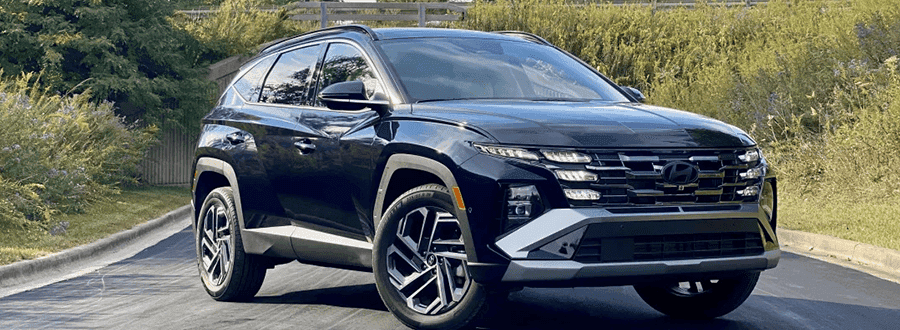
The 2026 Hyundai Tucson and Santa Fe differ primarily in physical dimensions, seating capacity, and powertrain output. The Tucson is a two-row compact crossover seating five passengers, making it agile and fuel-efficient for daily driving. The Santa Fe is a larger midsize crossover featuring standard three-row seating for up to seven passengers, a higher towing capacity, and more total cargo volume. Deciding between them comes down to whether your daily routine requires compact maneuverability or multi-row family versatility.
Both crossovers showcase Hyundai’s modern design direction, advanced infotainment technology, and standard SmartSense driver-assistance safety suites. For drivers navigating tight street parking and dense traffic around Atlantic Avenue in Delray Beach, the compact footprint of the Tucson provides effortless steering and easy parking. Conversely, growing families who need extra seating for carpools or dedicated space for beach gear often lean toward the larger Santa Fe.
Under the hood, both models offer distinct performance profiles. The Tucson is expected to carry forward a standard 2.5L I4 engine alongside an efficient 1.6L Turbo Hybrid option. The Santa Fe steps up performance with a standard 2.5L Turbo I4 engine producing 277 hp and 311 lb-ft of torque, or an available 1.6L Turbo Hybrid setup rated at 231 hp.
If you are ready to evaluate these two crossovers in person, our team at Delray Hyundai can walk you through the key differences on our showroom floor. You can view our Delray Beach showroom location to plan your visit, or give our sales department a quick call at (561) 462-1991 to speak directly with an advisor.
What Is the Physical Size and Wheelbase Difference Between the Tucson and Santa Fe?
The 2026 Hyundai Santa Fe is roughly 5 to 8 inches longer, 1 inch wider, and 4 inches taller than the 2026 Hyundai Tucson, while its wheelbase extends roughly 1 to 2 inches longer. Specifically, the Tucson measures approximately 185 inches in overall length with a 110-inch wheelbase, whereas the Santa Fe spans about 190 inches in length on an 111-inch wheelbase.
These dimensional variances significantly alter how each vehicle handles on the road and utilizes interior space:
- Overall Length: The Santa Fe measures approximately 190 inches compared to the Tucson’s roughly 185 inches, providing the extra body length required to house a third row of seats.
- Wheelbase: An 111-inch wheelbase on the Santa Fe provides a planted highway ride, while the Tucson’s 110-inch wheelbase aids sharp turning maneuvers in tight spaces.
- Vehicle Height: Standing around 70 inches tall, the Santa Fe sits nearly 4 inches higher than the Tucson, giving drivers a slightly higher seating position and greater overall exterior presence.
- Body Width: At nearly 75 inches wide, both crossovers share a similar track width, but the Santa Fe’s boxy architecture maximizes shoulder room across all rows.
The extended wheelbase and longer body of the Santa Fe contribute directly to its increased towing stability. When equipped with trailer brakes, the Santa Fe can tow up to 3,500 lbs on standard trims and up to 4,500 lbs on the XRT trim, compared to the Tucson’s 2,000 lbs maximum towing limit.
Shoppers comparing monthly payment structures for both vehicle sizes can submit an online financing application to prequalify before visiting the lot.
Will Both the 2026 Hyundai Tucson and Santa Fe Fit in a Standard Garage?
Yes, both the 2026 Hyundai Tucson and the 2026 Hyundai Santa Fe will fit comfortably inside a standard residential single-car or two-car garage. A typical residential garage stall measures between 20 and 24 feet in depth (240 to 288 inches) and 8 to 10 feet in width (96 to 120 inches), offering ample clearance for both vehicles.
Parking clearance calculations reveal how easily each crossover integrates into residential home storage:
- Length Clearance: The Tucson leaves roughly 55 to 103 inches of clearance in a 20-foot garage. The Santa Fe leaves approximately 50 to 98 inches, allowing full access to walk around the tailgate when closed.
- Height Clearance: Standard garage door openings range from 7 to 8 feet (84 to 96 inches) tall. With the Santa Fe measuring roughly 70 inches tall with roof rails and the Tucson standing near 66 inches, both clear open doors without interference.
- Width Clearance: Both vehicles measure approximately 75 inches wide excluding side mirrors. Leaving side mirrors unfolded requires about 83 to 85 inches of opening width, which fits normal 9-foot garage door structures.
Homeowners with shorter older garages or wall-mounted storage shelves should measure from the back wall to the garage door threshold before purchasing. While the Tucson offers more forgiving margins for storage bins and lawn equipment, the Santa Fe’s power-folding side mirrors and available Surround View Monitor system assist in guiding the vehicle safely into tighter spaces.
Which 2026 Hyundai SUV Offers Better Passenger Volume and Family Seating Flexibility?
With a standard three-row layout, the 2026 Hyundai Santa Fe can seat up to seven passengers, providing more room than the Tucson’s two-row, five-passenger setup. Across its three rows, the Santa Fe supplies approximately 115 cubic feet of passenger volume, while the Tucson provides about 108 cubic feet dedicated entirely to two rows.
Seating flexibility varies significantly between the two models depending on trim level and passenger needs:
- Tucson Layout: Features a 60/40 split-folding second-row bench seat with reclining seatbacks, providing impressive second-row legroom of nearly 41 inches and adult-friendly headroom.
- Santa Fe SE and SEL: Comes standard with a second-row 60/40 bench seat and a 50/50 split-folding third row to transport up to seven occupants.
- Santa Fe Limited and Calligraphy: Replaces the second-row bench with power-folding captain’s chairs, converting the cabin to a six-passenger setup with an accessible center aisle.
When local families visit our dealership to test crossover seating, parents usually check how easily the second-row seats slide forward with a child seat installed before evaluating third-row access. In suburban neighborhoods around Coral Springs where multi-child carpools and after-school sports commutes are daily routines, the Santa Fe’s power-release second-row seats make loading passengers quick and hassle-free. However, for smaller households that never require more than five seats, the Tucson provides exceptional second-row legroom without sacrificing rear cargo depth.
How Does Cargo Capacity Compare Between the Tucson, Santa Fe, and Compact Crossover Class?
The 2026 Hyundai Santa Fe delivers the largest overall cargo volume when all rear seats are folded, offering nearly 80 cubic feet of total cargo area compared to the Tucson’s roughly 75 to 80 cubic feet. However, when comparing space behind the second row, both Hyundai crossovers compete directly at the top of the compact and midsize utility segments.
Cargo room breaks down based on seating configurations and everyday loading requirements:
- Behind Third Row (Santa Fe): Provides approximately 15 cubic feet of storage when all three rows are in upright positions, suitable for grocery bags or upright carry-on luggage.
- Behind Second Row (Santa Fe vs. Tucson): Folding the Santa Fe’s third row expands cargo capacity to about 41 cubic feet. The Tucson offers nearly 39 cubic feet directly behind its second row, rivaling top competitors in the compact class.
- Maximum Cargo Space: Folding all rear seating flat creates roughly 80 cubic feet of cargo room in both models, featuring wide tailgate openings for bulky furniture or athletic equipment.
Across the broader market, the Tucson holds a distinct competitive edge in cargo efficiency over compact rivals like the Toyota RAV4, which provides under 70 cubic feet maximum, and matches the Honda CR-V’s top-tier cargo dimensions. The Santa Fe distinguishes itself with an extra-wide, squared-off tailgate design that acts as a shaded shelter during outdoor tailgate gatherings or days at the beach.
Can the Santa Fe Replace a Palisade, and How Does Third-Row Legroom Compare?
The 2026 Hyundai Santa Fe can successfully replace the larger Palisade for smaller families who need occasional third-row seating, but the Palisade remains the better option for households requiring frequent adult seating in the back row. The Santa Fe provides 30 inches of third-row legroom, whereas the Palisade offers roughly 31 to 32 inches alongside a wider interior cabin.
Key structural differences highlight how these two multi-row SUVs serve different family profiles:
- Third-Row Livability: The Santa Fe’s third row features HVAC vents and USB-C ports, but its 30 inches of legroom is best suited for children or short trips. The Palisade offers greater hip room and shoulder room for three passengers in row three.
- Maneuverability and Efficiency: Measuring several inches shorter than the Palisade, the Santa Fe is easier to park in suburban shopping centers and achieves better fuel economy, particularly when selecting the Santa Fe Hybrid.
- Towing Capability: The Palisade features a standard V6 engine capable of towing up to 5,000 lbs, while the Santa Fe tops out at 4,500 lbs in XRT trim or 3,500 lbs on standard configurations.
For buyers who rarely transport more than five adults simultaneously, the Santa Fe offers the style, modern dual 12.3-inch curved displays, and three-row convenience of a full midsize SUV without the extra bulk or cost of a larger vehicle platform.
Frequently Asked Questions About Hyundai SUV Sizes
Q: Does the Hyundai Tucson have a third-row seat option?
The Hyundai Tucson is strictly a two-row, five-passenger crossover. Hyundai does not offer a third-row configuration on the Tucson in any trim level. Shoppers requiring six or seven seats should look to the Santa Fe or Palisade lineups, which both feature standard three-row seating.
Q: Which Hyundai SUV gets better fuel economy?
The Hyundai Tucson generally delivers higher EPA fuel economy figures than the Santa Fe due to its lighter overall curb weight and smaller body profile. Front-wheel-drive gasoline Tucson models achieve roughly 28 mpg combined, while the Tucson Hybrid delivers even greater efficiency. The larger Santa Fe gas model averages around 23 to 24 mpg combined, with the Santa Fe Hybrid offering improved fuel savings for multi-row buyers.
Q: What warranty coverage comes with these Hyundai crossovers?
Both the 2026 Hyundai Tucson and Santa Fe are backed by Hyundai’s standard factory warranty package. This includes a 5-year/60,000-mile limited warranty and a 10-year/100,000-mile powertrain warranty. Hybrid variants also include dedicated high-voltage battery warranty protection up to 10 years or 100,000 miles.
Q: Is all-wheel drive available on both the Tucson and Santa Fe?
Yes, Hyundai’s HTRAC All-Wheel Drive system is available across all trim levels for both the Tucson and Santa Fe. Front-wheel drive comes standard on most gas and hybrid trims, while all-wheel drive is standard on off-road focused models like the Santa Fe XRT.
Q: How does the turning radius compare between the Tucson and Santa Fe?
The Hyundai Tucson features a tighter turning radius of approximately 19.3 feet, making U-turns and tight parking lot maneuvers effortless. The longer wheelbase of the Santa Fe increases its turning radius slightly, though standard front and rear parking sensors on upper trims help drivers navigate tight quarters safely.
Prices and MSRP referenced in this article are estimates for informational purposes only and do not constitute an offer to sell. See dealer for complete details.
Fuel economy estimates shown may differ from official EPA ratings and should not be relied upon as a guarantee of actual vehicle performance.
0 comment(s) so far on Hyundai Tucson vs Santa Fe: Which SUV Size Is Right for You?