

2027 Hyundai Santa Fe vs Honda Pilot
Finding the right three-row SUV means balancing passenger comfort, everyday practicality, performance, and long-term ownership costs. The 2027 Hyundai Santa Fe and Honda Pilot are two compelling choices for families who want flexible seating, modern technology, and enough versatility for everything from daily school runs to weekend road trips.
Although both vehicles offer three rows of seating, they approach family transportation differently. The Hyundai Santa Fe combines bold styling, an upscale interior, available hybrid efficiency, and an attractive starting price. The larger Honda Pilot emphasizes passenger capacity, cargo room, V6 performance, and towing capability.
Which SUV makes more sense for your family? Compare their pricing, performance, fuel economy, seating, technology, and safety features below, then browse our new Hyundai Santa Fe inventory at Delray Hyundai.
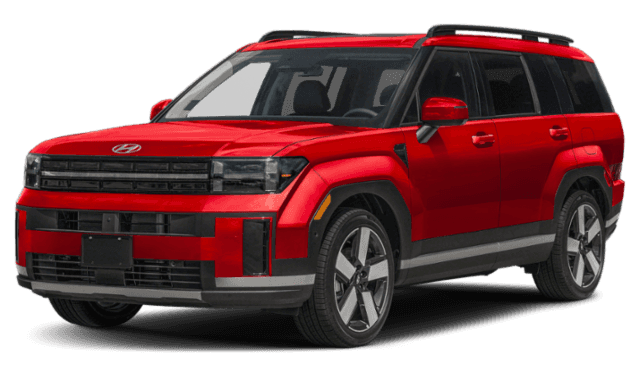
2027 Hyundai Santa Fe vs. Honda Pilot: At a Glance
The Santa Fe offers a lower starting price, more available powertrain options, and stronger fuel economy with its hybrid model. The Pilot is larger, seats up to eight passengers, and provides greater maximum towing and cargo capacity. Here’s how their key specifications compare.
| Specification | 2027 Hyundai Santa Fe | 2026 Honda Pilot* |
|---|---|---|
| Starting MSRP | $35,300 | $42,395 |
| Standard Engine | 2.5L Turbocharged 4-Cylinder | 3.5L V6 |
| Standard Horsepower | 277 hp | 285 hp |
| Standard Engine Torque | 311 lb-ft | 262 lb-ft |
| Hybrid Available | Yes | No |
| Best EPA-Estimated Combined MPG | 36 MPG (Hybrid FWD) | 22 MPG (FWD) |
| Seating Capacity | 6 or 7 passengers | 7 or 8 passengers |
| Cargo Space Behind Third Row | 14.6 cu ft | 18.6 cu ft (standard measurement) |
| Maximum Towing Capacity | 4,500 lbs (XRT AWD) | 5,000 lbs (AWD) |
*The comparison uses the latest published U.S. Honda Pilot specifications for the 2026 model year. Official 2027 Pilot specifications and pricing were not available at the time of writing. Starting MSRPs exclude destination charges and other applicable fees.
Pricing and Overall Value
For families comparing three-row SUVs, price can be one of the most significant deciding factors. The 2027 Hyundai Santa Fe starts at $35,300 MSRP for the SE trim, while the latest published Honda Pilot starts at $42,395 for the Sport.
That’s a starting-price difference of $7,095, giving Hyundai a substantial advantage for budget-conscious shoppers. Although the Pilot is a larger vehicle, the Santa Fe provides three-row seating, a long list of standard convenience features, and a modern interior at a considerably lower entry price.
The Santa Fe also offers a hybrid configuration starting at $36,650, still below the Pilot’s published starting MSRP. This gives shoppers the option to prioritize better fuel efficiency without moving into a higher vehicle price category.
| Model and Trim | Starting MSRP |
|---|---|
| 2027 Santa Fe SE | $35,300 |
| 2027 Santa Fe Hybrid SE | $36,650 |
| 2027 Santa Fe SEL | $37,840 |
| 2027 Santa Fe XRT | $42,290 |
| 2026 Pilot Sport | $42,395 |
| 2026 Pilot EX-L | $44,695 |
| 2026 Pilot TrailSport | $50,595 |
The Santa Fe’s competitive pricing continues throughout its lineup. The rugged Santa Fe XRT, for example, starts at $42,290 and includes HTRAC AWD, all-terrain tires, and additional ground clearance. This places it close to the Pilot Sport’s starting MSRP while adding adventure-oriented equipment.
For shoppers who want three-row practicality without paying for a larger SUV than they need, the Santa Fe represents an appealing value. You can also explore available Santa Fe Hybrid models to compare pricing and configurations.
Performance and Engine Options
The 2027 Hyundai Santa Fe and Honda Pilot both provide capable engines designed for daily driving, highway trips, and family travel. However, their engine configurations create noticeably different performance characteristics.
The 2027 Hyundai Santa Fe comes standard with a 2.5-liter turbocharged four-cylinder engine producing 277 horsepower and 311 lb-ft of torque. An eight-speed automatic transmission delivers power to the front wheels or to all four wheels with available HTRAC AWD.
One of the Santa Fe’s strengths is its generous torque output. Its turbocharged engine produces more torque than the Pilot’s naturally aspirated V6, helping deliver responsive acceleration during city driving, passing, and highway merging.
The 2026 Honda Pilot uses a 3.5-liter V6 engine producing 285 horsepower and 262 lb-ft of torque. It pairs with a 10-speed automatic transmission and offers front-wheel drive or Honda’s available i-VTM4 all-wheel-drive system. The Pilot delivers smooth V6 power and may appeal to drivers who prefer a traditional six-cylinder engine.
Hyundai adds another option with the 2027 Santa Fe Hybrid. Its 1.6-liter turbocharged engine works with an electric motor to produce 231 combined horsepower and 271 lb-ft of combined torque. A dedicated six-speed automatic transmission and available HTRAC AWD help balance efficiency with everyday performance.
The Pilot has a slight horsepower advantage over the standard gasoline Santa Fe, but Hyundai offers more powertrain flexibility. Drivers can choose the Santa Fe’s strong turbocharged gas engine or prioritize efficiency with its available hybrid, while the Pilot’s current lineup relies exclusively on its V6 powertrain.
Fuel Economy: Where the Santa Fe Stands Out
Fuel efficiency is an important consideration for drivers who regularly commute, transport family members, or take weekend trips around South Florida. While both SUVs offer reasonable gasoline fuel economy for their size, the Santa Fe provides a particularly strong advantage with its available hybrid powertrain.
The gas-powered 2027 Santa Fe FWD achieves an EPA-estimated 20 MPG city, 29 MPG highway, and 24 MPG combined. The 2026 Honda Pilot FWD is rated at 19 MPG city, 27 MPG highway, and 22 MPG combined.
| Configuration | City MPG | Highway MPG | Combined MPG |
|---|---|---|---|
| Santa Fe Gas FWD | 20 | 29 | 24 |
| Santa Fe Gas AWD | 20 | 28 | 23 |
| Santa Fe Hybrid FWD | 37 | 36 | 36 |
| Santa Fe Hybrid AWD | 35 | 34 | 35 |
| Pilot FWD | 19 | 27 | 22 |
| Pilot AWD (Most Trims) | 19 | 25 | 21 |
The difference becomes especially noticeable with the Santa Fe Hybrid, which achieves up to 36 MPG combined with front-wheel drive. That is considerably more efficient than the Pilot’s 22 MPG combined FWD rating.
Hyundai also estimates up to 637 miles of driving range for the Santa Fe Hybrid FWD based on a full tank and its EPA-estimated combined fuel economy. For families who spend substantial time commuting or traveling between Delray Beach, Fort Lauderdale, and Miami, this combination of fuel efficiency and driving range may be particularly valuable.
The Pilot remains a capable choice for drivers who prefer a V6 engine, but the Santa Fe Hybrid offers a clear advantage for shoppers looking to reduce gasoline consumption and potentially lower their long-term fuel expenses.
Interior Comfort and Passenger Space
Both the Hyundai Santa Fe and Honda Pilot provide three rows of seating, but their different exterior dimensions influence the amount of room available to passengers.
2027 Hyundai Santa Fe Interior
The 2027 Santa Fe emphasizes modern design, comfortable seating, and clever use of interior space. Depending on the configuration, it accommodates six or seven passengers. Models equipped with a second-row bench provide seven-passenger seating, while available captain’s chairs offer additional second-row comfort with seating for six.
The Santa Fe provides 44.4 inches of front legroom and 42.3 inches of second-row legroom, giving occupants generous space to stretch out. Third-row legroom measures 30 inches, making the rearmost seats particularly useful for children or shorter trips.
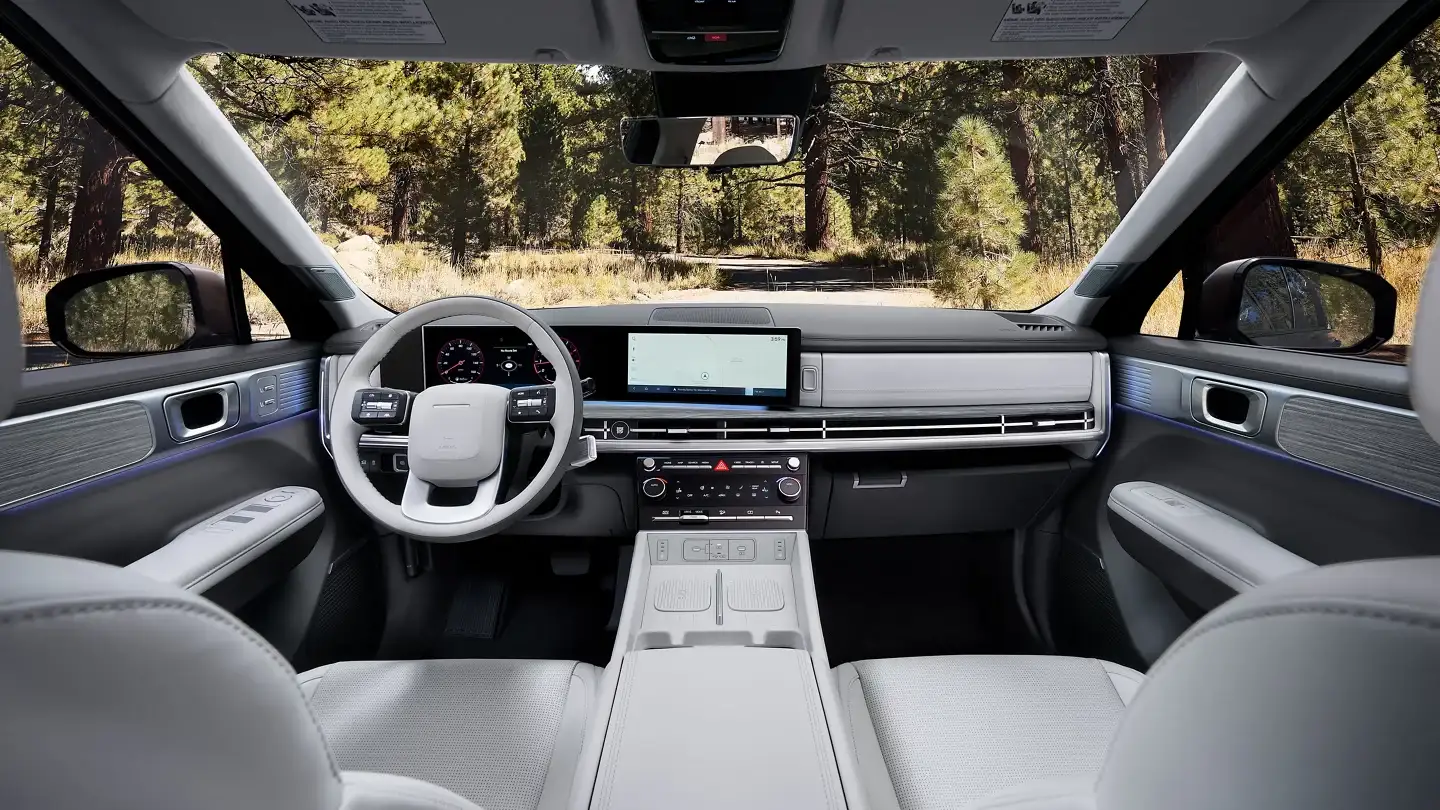
The interior features a modern dashboard with a standard 12.3-inch infotainment touchscreen, convenient storage areas, and available premium materials. Higher trims offer leather seating, ventilated front seats, a panoramic sunroof, and additional comfort features designed to make longer journeys more enjoyable.
2026 Honda Pilot Interior
The Honda Pilot is physically larger and accommodates up to eight passengers on most trims. Its available removable second-row center seat creates a flexible arrangement that allows families to switch between a bench-style configuration and easier third-row access.
The Pilot provides 41 inches of front legroom, 40.8 inches in the second row, and 32.5 inches in the third row. Its longer body and wider cabin make it especially appealing to families who frequently carry adults or older children in all three rows.
The Santa Fe provides more front- and second-row legroom, while the Pilot offers additional third-row space and greater maximum seating capacity. Families who rarely use their third row may appreciate the Santa Fe’s roomier first two rows and more manageable exterior size. Those who regularly transport seven or eight passengers may find the larger Pilot more practical.
Cargo Capacity and Everyday Practicality
Cargo space is another important factor for shoppers comparing three-row SUVs. Whether you’re loading beach chairs, luggage, sports equipment, or groceries, the amount of available storage can make a difference in daily convenience.
The Hyundai Santa Fe provides 14.6 cubic feet of cargo space behind the third row, expanding to 40.5 cubic feet behind the second row and 79.6 cubic feet behind the front seats. Its boxy exterior design and wide rear opening help make loading larger items convenient.
| Cargo Specification | 2027 Hyundai Santa Fe | 2026 Honda Pilot |
|---|---|---|
| Behind Third Row | 14.6 cu ft | 18.6 cu ft (standard) |
| Behind Second Row | 40.5 cu ft | 48.5 cu ft (standard) |
| Behind First Row | 79.6 cu ft | Up to 87.0 cu ft (standard) |
The Honda Pilot offers more cargo space at every seating position, reflecting its larger overall dimensions. This can be particularly useful for families who frequently travel with a full passenger load and need additional luggage space.
However, the Santa Fe’s smaller footprint can be an advantage in other situations. At approximately 190.2 inches long, it is nearly ten inches shorter than the Pilot, which measures about 200.1 inches. That difference can make the Santa Fe easier to maneuver through parking structures, crowded shopping centers, and tighter spaces around downtown Delray Beach.
The choice comes down to your priorities: the Pilot provides greater cargo capacity, while the Santa Fe offers a practical balance of interior versatility and exterior maneuverability.
Towing Capability and Outdoor Adventures
For South Florida families who enjoy boating, camping, or transporting recreational equipment, towing capability may influence which SUV is the better fit.
The 2027 Hyundai Santa Fe offers a towing capacity of up to 3,500 pounds with trailer brakes on most gas-powered trims. The adventure-oriented XRT AWD increases maximum towing capacity to 4,500 pounds and includes all-terrain tires, additional ground clearance, and HTRAC All-Wheel Drive.
For drivers who prioritize fuel efficiency, the Santa Fe Hybrid offers up to 2,000 pounds of towing capacity with trailer brakes. This makes it a practical option for smaller utility trailers or lightweight recreational equipment, although it is less suited to towing heavier loads.
The 2026 Honda Pilot has a maximum towing capacity of 3,500 pounds with front-wheel drive or 5,000 pounds with all-wheel drive when properly equipped. This gives the Pilot an advantage for drivers who regularly tow heavier trailers.
The Pilot’s higher AWD towing capacity makes it better suited for some recreational towing needs, while the Santa Fe XRT provides a competitive combination of capability, off-road-inspired equipment, and a lower starting price.
Technology and Infotainment
Both the Santa Fe and Pilot offer modern infotainment systems, smartphone connectivity, and convenience features designed to simplify everyday driving.
The 2027 Hyundai Santa Fe comes standard with a 12.3-inch infotainment touchscreen, wireless Apple CarPlay and Android Auto, and Hyundai Bluelink+ connected services. Available technology includes a 12.3-inch digital instrument cluster, wireless phone charging, a head-up display, and a premium Bose audio system.
The Santa Fe’s dual-screen dashboard design creates a clean, modern appearance while placing vehicle information and entertainment features within easy reach. Available Digital Key functionality adds convenience by allowing compatible smartphones to perform certain vehicle access and control functions.
The 2026 Honda Pilot features a 12.3-inch infotainment touchscreen, a 10.2-inch digital instrument cluster, and Google built-in technology. Its integrated Google features provide access to compatible navigation, applications, and voice-assistant functionality.
Honda also offers available features including a Bose premium audio system, head-up display, and CabinTalk in-vehicle communication system, which allows front-seat occupants to communicate more easily with passengers in the rear rows.
Both SUVs offer strong technology packages. The Santa Fe’s contemporary interface and available premium features are attractive to tech-focused drivers, while the Pilot’s Google integration and family-oriented communication features may appeal to buyers who frequently travel with passengers in all three rows.
Safety Features and Driver Assistance
Safety technology is a priority for many three-row SUV shoppers. Both Hyundai and Honda include comprehensive driver-assistance systems designed to help monitor surrounding traffic, support lane positioning, and reduce the risk of certain collisions.
The 2027 Hyundai Santa Fe offers a broad selection of Hyundai SmartSense features, including:
- Forward Collision-Avoidance Assist
- Lane Keeping Assist
- Lane Following Assist
- Smart Cruise Control with Stop & Go
- Blind-Spot Collision-Avoidance Assist
- Rear Cross-Traffic Collision-Avoidance Assist
- Driver Attention Warning
- Available Highway Driving Assist
Higher Santa Fe trims provide additional technologies such as Blind-Spot View Monitor, Surround View Monitor, and Remote Smart Parking Assist. These available systems can be particularly helpful in tight parking spaces and heavy traffic.
The 2026 Honda Pilot includes Honda Sensing driver-assistance technology with features such as Collision Mitigation Braking System, Road Departure Mitigation, Lane Keeping Assist, Adaptive Cruise Control with Low-Speed Follow, and Traffic Sign Recognition.
The Pilot also offers blind-spot monitoring, parking sensors, and an available multiview camera system on select trims. These features help support awareness during parking, lane changes, and everyday driving.
Both vehicles provide modern safety and driver-assistance equipment. Buyers should compare individual trims carefully to determine which advanced features are standard and which require moving to a higher configuration.
Warranty Coverage and Long-Term Ownership
Another important consideration when comparing family SUVs is warranty coverage. Hyundai provides longer basic and powertrain limited warranty terms than Honda, which can be especially valuable for buyers who plan to keep their vehicles for many years.
| Warranty Coverage | Hyundai Santa Fe | Honda Pilot |
|---|---|---|
| Basic Limited Warranty | 5 years / 60,000 miles | 3 years / 36,000 miles |
| Powertrain Limited Warranty | 10 years / 100,000 miles* | 5 years / 60,000 miles |
Hyundai’s 10-year / 100,000-mile powertrain limited warranty provides substantial coverage for eligible original owners. Honda’s powertrain warranty extends for five years or 60,000 miles, making the Hyundai coverage particularly attractive for long-term ownership.
The Santa Fe Hybrid also offers the potential for lower fuel costs over time. For drivers who accumulate significant mileage, the combination of hybrid efficiency and extensive warranty protection may improve the vehicle’s overall ownership value.
When evaluating total cost of ownership, shoppers should consider warranty terms, anticipated maintenance, gasoline expenses, annual mileage, and the vehicle’s initial purchase price rather than focusing on any single factor.
Which Is Better: The Hyundai Santa Fe or Honda Pilot?
The Hyundai Santa Fe and Honda Pilot are both appealing three-row SUVs, but their strengths make them better suited to different types of buyers.
The Honda Pilot is a strong choice for larger families who regularly need eight-passenger seating, additional third-row space, and greater cargo capacity. Its V6 engine and available 5,000-pound towing capacity also make it attractive for drivers with more demanding hauling requirements.
However, the 2027 Hyundai Santa Fe offers several compelling advantages. Its starting price is more than $7,000 below the Pilot’s currently published MSRP, while its available hybrid powertrain delivers significantly better fuel economy. The Santa Fe also offers generous first- and second-row legroom, advanced technology, an upscale cabin design, and longer basic and powertrain warranty protection.
For drivers in Delray Beach, Boca Raton, and surrounding South Florida communities who want a three-row SUV that balances affordability, fuel efficiency, passenger comfort, and everyday practicality, the 2027 Hyundai Santa Fe is an excellent option to consider.
Frequently Asked Questions
Is the 2027 Hyundai Santa Fe more affordable than the Honda Pilot?
Yes. The 2027 Hyundai Santa Fe starts at $35,300 MSRP, compared to $42,395 for the 2026 Honda Pilot. That gives the Santa Fe a $7,095 starting-price advantage based on currently published manufacturer pricing. Official 2027 Honda Pilot pricing had not yet been released at the time of writing.
Does the 2027 Hyundai Santa Fe offer a hybrid option?
Yes. The 2027 Santa Fe Hybrid uses a 1.6-liter turbocharged gasoline engine and an electric motor to produce 231 combined horsepower. Front-wheel-drive hybrid models achieve up to an EPA-estimated 36 MPG combined, while all-wheel-drive hybrids achieve up to 35 MPG combined.
Which SUV has more passenger space?
The Honda Pilot is larger overall and offers seating for up to eight passengers, compared to six or seven in the Santa Fe. However, the Santa Fe provides more front- and second-row legroom, making it an appealing choice for drivers who primarily use the first two rows.
Which SUV has better fuel economy?
The Hyundai Santa Fe Hybrid has a clear advantage, achieving up to 36 MPG combined. The 2026 Honda Pilot achieves up to 22 MPG combined with front-wheel drive and does not currently offer a hybrid powertrain.
Can the 2027 Hyundai Santa Fe tow a trailer?
Yes. Most gas-powered Santa Fe trims can tow up to 3,500 pounds with trailer brakes, while the XRT AWD increases maximum capacity to 4,500 pounds. Santa Fe Hybrid models offer up to 2,000 pounds of towing capacity with trailer brakes. Always confirm equipment and towing requirements before hauling a trailer.
Where can I test drive a 2027 Hyundai Santa Fe near Delray Beach?
Visit Delray Hyundai at 655 NE 6th Ave, Delray Beach, FL 33483, to explore available Santa Fe models and compare gas and hybrid configurations. You can also contact our sales team at (561) 462-1994 to ask about current inventory or schedule a test drive.
Test Drive the 2027 Hyundai Santa Fe at Delray Hyundai
Ready to explore the 2027 Hyundai Santa Fe for yourself? Visit Delray Hyundai to compare available trims, discover the benefits of the Santa Fe Hybrid, and find the configuration that best suits your family. Our team can help you review current inventory, available features, financing opportunities, and test drive availability.
Vehicle specifications, pricing, fuel economy, towing capacity, passenger seating, and feature availability are based on manufacturer-published information available at the time of writing. This article compares the 2027 Hyundai Santa Fe with the 2026 Honda Pilot, the latest Pilot model with published U.S. specifications. Future model-year details may differ. MSRP excludes destination charges, taxes, title, license fees, options, and dealer charges. EPA fuel-economy figures are for comparison purposes only; actual mileage varies. Towing capacity requires proper equipment and is subject to manufacturer limits. Driver-assistance systems do not replace attentive driving. *Hyundai’s 10-year / 100,000-mile powertrain limited warranty applies to eligible original owners; subsequent-owner coverage differs. Warranty coverage is subject to manufacturer terms and conditions. Contact the dealer for current inventory, equipment availability, and complete details.