

2026 Hyundai IONIQ 5 vs. Volkswagen ID.4
Shopping for an electric SUV that combines impressive range, modern technology, and everyday practicality? The 2026 Hyundai IONIQ 5 and 2026 Volkswagen ID.4 are two compelling choices. Both offer available all-wheel drive, comfortable five-passenger cabins, and electric powertrains designed for commuting and longer trips.
However, the two vehicles take different approaches. The Hyundai IONIQ 5 emphasizes fast charging, distinctive styling, and a spacious interior, while the Volkswagen ID.4 offers strong electric performance, a more traditional crossover design, and generous cargo capacity. Pricing is another major difference, with the IONIQ 5 starting considerably below the ID.4.
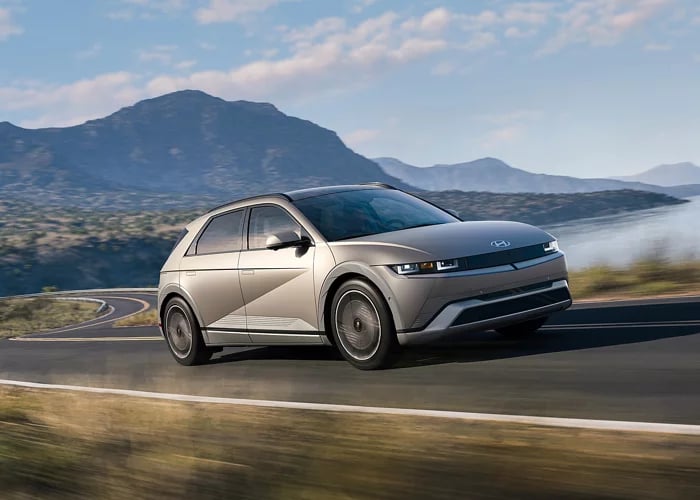
Which electric SUV makes more sense for drivers in Delray Beach, Boca Raton, and surrounding South Florida communities? Compare their pricing, performance, range, charging capabilities, interior space, and safety technology below. You can also explore our Hyundai IONIQ 5 inventory at Delray Hyundai.
2026 Hyundai IONIQ 5 vs. Volkswagen ID.4: At a Glance
The IONIQ 5 offers a lower starting MSRP and greater maximum EPA-estimated driving range. The ID.4 counters with more cargo space and higher horsepower in its standard motor configuration. Both offer five-passenger seating and available all-wheel drive.
| Specification | 2026 Hyundai IONIQ 5 | 2026 Volkswagen ID.4 |
|---|---|---|
| Starting MSRP | $35,000 | $45,095 |
| Maximum EPA-Estimated Range | 318 miles | 291 miles |
| Battery Options | 63 kWh / 84 kWh | 82 kWh |
| Motor Configurations | Single Motor RWD / Dual Motor AWD | Single Motor RWD / Dual Motor AWD |
| Horsepower Range | 168–320 hp | 282–335 hp |
| Seating Capacity | 5 passengers | 5 passengers |
| Cargo Space Behind Rear Seats | 26.3 cu ft | 30.3 cu ft |
| Maximum Cargo Space | 58.5 cu ft | 64.2 cu ft |
| Charging Port | Native NACS | CCS; NACS DC adapter supported |
Starting MSRPs exclude applicable destination charges, taxes, title, license, and dealer fees. Maximum range figures are achieved by specific configurations and should not be interpreted as the range of the least expensive trims. Actual vehicle specifications and range vary by configuration.
Pricing and Trim-Level Value
One of the most noticeable differences between the 2026 Hyundai IONIQ 5 and Volkswagen ID.4 is the starting price. The IONIQ 5 SE Standard Range RWD starts at $35,000 MSRP, compared to $45,095 for the Volkswagen ID.4 Pro RWD. That represents a $10,095 difference between the entry-level models.
However, the entry-level vehicles have different batteries. The IONIQ 5 SE Standard Range uses a 63-kWh battery with an EPA-estimated 245 miles of range, while the ID.4 Pro RWD features an 82-kWh battery and up to 291 miles of range.
A more useful long-range comparison is the IONIQ 5 SE RWD, which starts at $37,500 and provides an EPA-estimated 318 miles using its 84-kWh battery. Even this longer-range Hyundai configuration starts $7,595 below the ID.4 Pro RWD while offering greater estimated driving range.
2026 Hyundai IONIQ 5 Pricing
| Trim / Configuration | Starting MSRP | EPA-Estimated Range |
|---|---|---|
| SE Standard Range RWD | $35,000 | 245 miles |
| SE RWD | $37,500 | 318 miles |
| SEL RWD | $39,800 | 318 miles |
| SE AWD | $41,000 | 290 miles |
| SEL AWD | $43,300 | 290 miles |
| Limited RWD | $45,075 | 318 miles |
| XRT AWD | $46,275 | 259 miles |
| Limited AWD | $48,975 | 269 miles |
2026 Volkswagen ID.4 Pricing
| Trim | Starting MSRP |
|---|---|
| Pro RWD | $45,095 |
| AWD Pro | $48,995 |
| Pro S RWD | $50,195 |
| AWD Pro S | $54,095 |
| AWD Pro S Plus | $57,655 |
Hyundai provides several configurations below the Volkswagen ID.4’s starting MSRP. Shoppers can choose a lower-cost standard-range model, upgrade to a larger battery, or select an AWD configuration without immediately entering the Volkswagen’s higher price range.
For buyers in Delray Beach who want long-range electric capability at a competitive starting price, the IONIQ 5 SE RWD and SEL RWD are particularly attractive options. You can explore financing options online before visiting Delray Hyundai.
Performance and Electric Powertrains
Both the 2026 Hyundai IONIQ 5 and Volkswagen ID.4 offer single-motor rear-wheel-drive and dual-motor all-wheel-drive configurations. Their electric motors provide responsive acceleration, smooth power delivery, and quiet operation during everyday driving.
The Hyundai IONIQ 5 offers three primary power outputs. Its SE Standard Range RWD model produces 168 horsepower, while long-range RWD configurations deliver 225 horsepower and 258 lb-ft of torque. Stepping up to dual-motor AWD increases combined output to 320 horsepower and 446 lb-ft of torque.
The Volkswagen ID.4 emphasizes stronger output in its entry-level configuration. Its single-motor RWD powertrain produces 282 horsepower, while AWD configurations increase output to 335 horsepower. This gives the ID.4 an advantage in headline horsepower when comparing standard motor configurations.
However, the IONIQ 5’s AWD system provides plenty of acceleration for merging onto highways, passing slower traffic, and everyday driving. Both SUVs use single-speed transmissions, eliminating traditional gear changes and allowing their electric motors to deliver power smoothly.
| Specification | 2026 IONIQ 5 | 2026 ID.4 |
|---|---|---|
| Motor Configuration | Single Motor / Dual Motor | Single Motor / Dual Motor |
| RWD Horsepower | 168 or 225 hp | 282 hp |
| AWD Horsepower | 320 hp | 335 hp |
| Transmission | Single-speed | Single-speed |
| Drivetrain | RWD or AWD | RWD or AWD |
The ID.4 is a strong choice for drivers who prioritize maximum power output, while the IONIQ 5 offers a wider range of price and performance combinations. For many South Florida drivers, the IONIQ 5’s responsive acceleration and comfortable ride provide an excellent balance for daily commuting and longer journeys.
Electric Driving Range and Efficiency
Driving range is one of the most important factors when choosing an electric SUV. Whether you’re commuting between Delray Beach and West Palm Beach or planning longer trips across Florida, a vehicle’s estimated range can influence how frequently you need to recharge.
The 2026 Hyundai IONIQ 5 offers up to 318 miles of EPA-estimated range in its long-range rear-wheel-drive configurations. The Volkswagen ID.4 provides up to 291 miles in its Pro and Pro S RWD configurations.
That gives the IONIQ 5 a 27-mile advantage in maximum EPA-estimated driving range. Hyundai also offers a smaller 63-kWh battery for buyers who want a more affordable entry-level EV, while the 84-kWh battery is designed for longer trips.
| Configuration | EPA-Estimated Range |
|---|---|
| IONIQ 5 SE Standard Range RWD | 245 miles |
| IONIQ 5 SE / SEL / Limited RWD | 318 miles |
| IONIQ 5 SE / SEL AWD | 290 miles |
| IONIQ 5 Limited AWD | 269 miles |
| IONIQ 5 XRT AWD | 259 miles |
| Volkswagen ID.4 Pro / Pro S RWD | 291 miles |
| Volkswagen ID.4 AWD Models | 263 miles |
Both vehicles provide practical range for everyday driving. The ID.4’s available 291 miles is sufficient for many commutes and weekend trips, while the IONIQ 5’s longer-range RWD configurations offer additional flexibility for drivers who regularly cover greater distances.
Actual electric range depends on driving speed, weather, climate control use, battery temperature, road conditions, and other factors. Drivers frequently traveling on I-95 or Florida’s Turnpike should consider these conditions when choosing the battery and drivetrain configuration that best fits their lifestyle.
Charging Speed and Public Charging Compatibility
Charging convenience can make a significant difference in the experience of owning an electric vehicle. Both the IONIQ 5 and ID.4 support public DC fast charging and home Level 2 charging, but there are important differences in charging speed and connector design.
Hyundai IONIQ 5 Charging
The 2026 Hyundai IONIQ 5 features advanced 800-volt electrical architecture that supports rapid DC fast charging. With a compatible 350-kW, 800-volt charger and the included CCS adapter, the IONIQ 5 can recharge from 10% to 80% in as little as approximately 20 minutes under ideal conditions.
The IONIQ 5 also features a native NACS charging port, allowing access to compatible Tesla Superchargers without a separate NACS adapter. Charging from 10% to 80% at a compatible 400-volt NACS fast charger takes approximately 30 minutes under specified conditions.
At home, a compatible 240-volt Level 2 charger can replenish the IONIQ 5’s long-range battery from 10% to 100% in approximately 7 hours and 20 minutes. This allows many owners to recharge overnight and begin the following day with a replenished battery.
Volkswagen ID.4 Charging
The 2026 Volkswagen ID.4 supports DC fast charging and can recharge from 10% to 80% in approximately 28 minutes under optimal conditions. A compatible home Level 2 charger can also replenish its battery overnight.
Unlike the IONIQ 5, the 2026 ID.4 uses a CCS charging port. Drivers can access compatible Tesla Superchargers using a Volkswagen-approved NACS DC adapter. Adapter availability and cost should be confirmed separately, and not all Tesla charging locations support every non-Tesla vehicle.
Both vehicles make everyday electric driving practical, but the IONIQ 5 offers an advantage for drivers who prioritize shorter high-power fast-charging stops. Its native NACS port and included CCS adapter also provide flexibility across compatible charging networks.
Interior Comfort and Passenger Space
The 2026 Hyundai IONIQ 5 and Volkswagen ID.4 both accommodate five passengers, but their cabin designs provide different experiences. The IONIQ 5 emphasizes an open interior layout, while the ID.4 offers the familiar seating arrangement and styling of a traditional compact crossover.
The Hyundai IONIQ 5 benefits from its dedicated electric platform and exceptionally long 118.1-inch wheelbase. This creates a flat cabin floor and generous passenger accommodations despite the vehicle’s relatively compact exterior dimensions.
Front passengers enjoy 41.7 inches of legroom, while rear passengers have 39.4 inches. The wide cabin, spacious seating arrangement, and uncluttered dashboard contribute to a comfortable environment for commuting and longer journeys.
Available IONIQ 5 features include heated and ventilated front seats, premium seating materials, dual-zone climate control, and a panoramic Vision Roof on select trims. Higher configurations also offer driver-seat memory and additional comfort features.
The Volkswagen ID.4 provides a contemporary cabin with supportive seats, available premium upholstery, and a spacious five-passenger layout. Its higher roofline and practical design contribute to an airy interior atmosphere.
Both SUVs provide comfortable accommodations for everyday driving. The IONIQ 5’s distinctive flat-floor layout and long wheelbase may appeal to shoppers prioritizing passenger comfort, while the ID.4’s more traditional crossover proportions offer a familiar driving environment.
Dimensions and Cargo Capacity
Practical cargo space is an important consideration for drivers who regularly transport luggage, groceries, sports equipment, or recreational gear. Both vehicles offer folding rear seats and wide liftgate openings, but their cargo dimensions differ.
The Volkswagen ID.4 has the advantage in cargo volume, offering 30.3 cubic feet behind the second row and 64.2 cubic feet with the rear seats folded. The IONIQ 5 provides 26.3 cubic feet behind its rear seats and 58.5 cubic feet with the seats folded.
| Dimension | 2026 IONIQ 5 | 2026 ID.4 |
|---|---|---|
| Seating Capacity | 5 | 5 |
| Overall Length | 183.3 inches | 180.5 inches |
| Overall Width | 74.4 inches | 72.9 inches |
| Wheelbase | 118.1 inches | 108.8 inches |
| Cargo Behind Rear Seats | 26.3 cu ft | 30.3 cu ft |
| Maximum Cargo Capacity | 58.5 cu ft | 64.2 cu ft |
The IONIQ 5 is slightly longer and wider, and its much longer wheelbase helps maximize passenger space. The ID.4, meanwhile, provides more cargo volume behind the rear seats and when the seats are folded.
If you frequently transport larger items, the Volkswagen’s cargo capacity may be a deciding factor. For drivers who place greater importance on passenger comfort and an open cabin design, the IONIQ 5 offers a compelling alternative.
Technology and Infotainment
Both electric SUVs include advanced infotainment systems and smartphone connectivity. However, their dashboard layouts and approaches to everyday controls are noticeably different.
The 2026 Hyundai IONIQ 5 features a 12.3-inch digital instrument cluster and a 12.3-inch infotainment touchscreen arranged in a wide, integrated display. Wireless Apple CarPlay and Android Auto are standard, making it convenient to access compatible navigation, music, and smartphone applications.
Hyundai also retains physical controls for several frequently used functions, helping drivers adjust settings without navigating multiple touchscreen menus. Available technology includes a Bose premium audio system, head-up display, wireless device charging, and Hyundai’s Bluelink connected services.
The 2026 Volkswagen ID.4 comes standard with a 12.9-inch infotainment touchscreen and wireless smartphone connectivity. Its interface emphasizes touchscreen and touch-sensitive controls, while available features include premium audio, wireless charging, and additional connected services.
Both vehicles provide modern technology, but buyers who prefer a combination of digital displays and dedicated physical controls may find the IONIQ 5’s interior more intuitive. Drivers who enjoy a touchscreen-centered interface may prefer the Volkswagen’s design.
Safety and Driver Assistance Features
Safety is an important consideration when choosing an electric SUV, and both manufacturers provide comprehensive driver-assistance technologies designed to support awareness and confidence behind the wheel.
Hyundai SmartSense
The 2026 Hyundai IONIQ 5 offers a broad collection of Hyundai SmartSense safety and driver-assistance features, including:
- Forward Collision-Avoidance Assist
- Blind-Spot Collision-Avoidance Assist
- Lane Keeping Assist
- Lane Following Assist
- Rear Cross-Traffic Collision-Avoidance Assist
- Smart Cruise Control with Stop & Go
- Highway Driving Assist
Higher IONIQ 5 trims offer additional features such as Highway Driving Assist 2, Blind-Spot View Monitor, and advanced parking assistance. The available Blind-Spot View Monitor displays a camera view of adjacent traffic in the digital instrument cluster when the corresponding turn signal is activated.
Volkswagen IQ.DRIVE
The Volkswagen ID.4 includes IQ.DRIVE driver-assistance technology. This suite offers features such as Front Assist, Lane Assist, Adaptive Cruise Control, and Travel Assist, which can provide steering and speed support under appropriate conditions.
Additional available safety features and parking assistance systems vary by ID.4 trim. Like Hyundai’s driver-assistance technologies, these systems are intended to support the driver rather than replace attentive driving.
Both SUVs offer comprehensive safety equipment. The IONIQ 5’s available camera-based blind-spot display and advanced highway assistance systems may appeal to drivers who prioritize additional visual information and driver convenience.
Warranty Coverage and Long-Term Ownership
Long-term protection matters when purchasing an electric vehicle. Both Hyundai and Volkswagen provide warranty coverage for their electric batteries and major components, but the coverage periods differ.
| Coverage | Hyundai IONIQ 5 | Volkswagen ID.4 |
|---|---|---|
| New Vehicle Limited Warranty | 5 years / 60,000 miles | 4 years / 50,000 miles |
| High-Voltage Battery Warranty | 10 years / 100,000 miles | 8 years / 100,000 miles |
| Roadside Assistance | 5 years / unlimited miles | 3 years / 36,000 miles |
The IONIQ 5 offers longer basic warranty protection and two additional years of high-voltage battery coverage. Hyundai’s five years of unlimited-mileage roadside assistance may also provide an advantage for drivers who travel frequently.
The Volkswagen ID.4 offers a competitive warranty package of its own, including four years or 50,000 miles of new vehicle coverage and eight years or 100,000 miles of high-voltage battery protection.
For shoppers who plan to keep their electric SUV for several years, Hyundai’s longer manufacturer coverage may be an important ownership benefit. All warranty protection is subject to manufacturer eligibility requirements, exclusions, and conditions.
Which Is Better: The 2026 Hyundai IONIQ 5 or Volkswagen ID.4?
The 2026 Hyundai IONIQ 5 and Volkswagen ID.4 are both appealing electric SUVs, but their strengths make them better suited to different priorities.
The Volkswagen ID.4 is an attractive choice for drivers who want a familiar crossover design, strong standard motor output, and generous cargo space. Its 30.3 cubic feet of storage behind the rear seats and 64.2 cubic feet with the seats folded provide a practical advantage for transporting larger items.
However, the 2026 Hyundai IONIQ 5 offers several compelling advantages. Its lower starting price makes electric vehicle ownership more accessible, while long-range RWD configurations provide up to 318 miles of EPA-estimated range. Its fast-charging capabilities, spacious interior, native NACS connector, and longer warranty coverage further strengthen its appeal.
For drivers in Delray Beach, Boca Raton, Boynton Beach, and surrounding South Florida communities who prioritize value, electric range, charging convenience, and passenger comfort, the 2026 Hyundai IONIQ 5 deserves serious consideration.
Frequently Asked Questions
Is the 2026 Hyundai IONIQ 5 less expensive than the Volkswagen ID.4?
Yes. The 2026 Hyundai IONIQ 5 starts at $35,000 MSRP for the SE Standard Range RWD, compared to $45,095 for the 2026 Volkswagen ID.4 Pro RWD. The IONIQ 5 SE Long Range RWD starts at $37,500, providing an 84-kWh battery and up to 318 miles of EPA-estimated range.
Which electric SUV has a longer driving range?
The Hyundai IONIQ 5 offers a longer maximum EPA-estimated range. Select long-range rear-wheel-drive models provide up to 318 miles, compared to 291 miles for the Volkswagen ID.4 Pro and Pro S RWD models.
Can both electric SUVs use Tesla Superchargers?
Both vehicles can access compatible Tesla Superchargers. The Hyundai IONIQ 5 has a native NACS charging port, while the Volkswagen ID.4 uses a CCS charging port and requires a Volkswagen-approved NACS DC adapter. Charging compatibility depends on the specific station and vehicle.
Which SUV has more cargo space?
The Volkswagen ID.4 provides more cargo space, with 30.3 cubic feet behind the rear seats and 64.2 cubic feet with the seats folded. The Hyundai IONIQ 5 offers 26.3 and 58.5 cubic feet, respectively, along with a longer wheelbase and spacious passenger cabin.
How quickly can the 2026 Hyundai IONIQ 5 charge?
With a compatible 350-kW, 800-volt DC fast charger and the included CCS adapter, the 2026 Hyundai IONIQ 5 can charge from 10% to 80% in approximately 20 minutes under ideal conditions. Charging times vary depending on the battery’s condition, temperature, and available charging power.
Which electric SUV offers better warranty coverage?
Hyundai offers longer coverage in several key areas. The IONIQ 5 includes a 5-year / 60,000-mile New Vehicle Limited Warranty and a 10-year / 100,000-mile high-voltage battery warranty. The Volkswagen ID.4 provides a 4-year / 50,000-mile New Vehicle Limited Warranty and an 8-year / 100,000-mile high-voltage battery warranty.
Where can I test drive a Hyundai IONIQ 5 near Delray Beach?
Visit Delray Hyundai at 655 NE 6th Ave, Delray Beach, FL 33483, to explore available IONIQ 5 models. You can also contact our sales team at (561) 462-1994 to ask about inventory or schedule a test drive.
Explore the Hyundai IONIQ 5 at Delray Hyundai
Ready to experience the Hyundai IONIQ 5 for yourself? Visit Delray Hyundai to explore available trims, compare rear-wheel-drive and all-wheel-drive configurations, and learn more about electric vehicle ownership. Our team can help you review current inventory, charging options, financing opportunities, and test drive availability.
Vehicle specifications, MSRP, charging times, electric range, features, and warranty coverage are based on manufacturer-published information for the 2026 Hyundai IONIQ 5 and 2026 Volkswagen ID.4. MSRP excludes applicable destination charges, taxes, title, license fees, options, and dealer charges. EPA-estimated range is for comparison purposes only; actual results vary based on driving conditions, battery condition, temperature, vehicle configuration, and other factors. Charging times depend on charger capability, battery temperature, and operating conditions. Driver-assistance features do not replace attentive driving. Warranty coverage is subject to manufacturer terms, exclusions, and eligibility requirements. Images are illustrative and may show equipment or configurations that differ from available vehicles. Contact Delray Hyundai for current inventory availability and complete details.