

Hyundai Elantra N vs Elantra N Line: What’s the Difference?
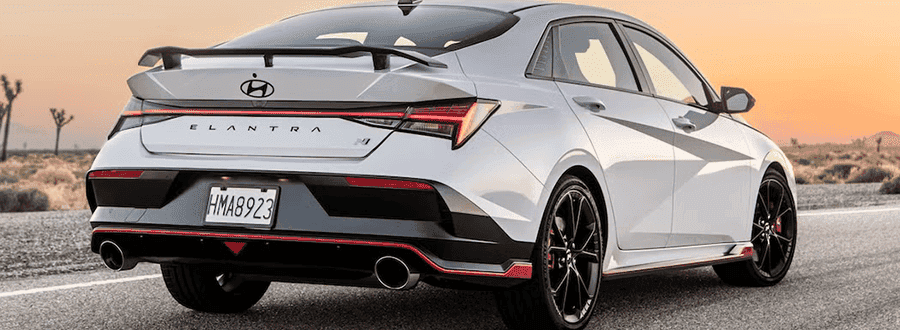
The Hyundai Elantra N is a high-performance sports sedan engineered with a 2.0-liter turbocharged four-cylinder engine producing 276 hp, an electronic limited-slip differential, and adaptive suspension. In contrast, the Hyundai Elantra N Line is a sport-inspired sedan featuring a 1.6-liter turbocharged four-cylinder engine rated at 201 hp with a sport-tuned chassis, delivering energetic performance suited for daily commuting with higher fuel efficiency.
While complete U.S. market specification details for the upcoming 2027 model year are anticipated from Hyundai later in 2026, both variants continue to build on their distinct performance foundations. The Elantra N serves as a dedicated track-capable machine built for driving enthusiasts, whereas the Elantra N Line provides race-inspired aesthetics and eager acceleration without compromising daily fuel economy or ride comfort.
For drivers cruising along Atlantic Avenue in Delray Beach, choosing between these two performance-oriented sedans comes down to how much track capability you want in your garage. If you want to explore the lineup in person, stop by our showroom at our Delray Beach dealership location or give our sales team a quick call at (561) 462-1991 to check incoming availability.
What Are the Key Powertrain, Engine, and Transmission Differences Between the Elantra N and N Line?
Under the hood, the Elantra N’s 2.0-liter turbocharged engine delivers 276 hp, significantly outpacing the Elantra N Line’s 1.6-liter turbocharged engine with 201 hp. Gearbox choices also split the lineup, offering a manual or wet dual-clutch automatic on the full N model versus a dry dual-clutch automatic on the N Line.
Transmission availability reflects each sedan’s intended driving dynamic:
- Elantra N: Choice of a 6-speed manual transmission with automatic rev-matching or an 8-speed wet dual-clutch transmission with paddle shifters. Equipping the automatic gearbox unlocks N Grin Shift, a steering-wheel-mounted boost button that temporarily increases engine output to 286 hp for up to 20 seconds.
- Elantra N Line: Equipped with a 7-speed dual-clutch transmission with paddle shifters and front-wheel drive, engineered for crisp gear shifts and responsive midrange power during everyday driving.
Fuel economy figures show a noticeable separation between track capability and daily efficiency. The Elantra N achieves an EPA-estimated 21 mpg city / 29 mpg highway with the manual gearbox (and around 20 mpg city / 27 mpg highway with the automatic). The Elantra N Line yields an EPA-estimated 28 mpg city / 35 mpg highway, making it an exceptionally frugal option for long highway drives and daily errands.
What Performance and Chassis Components Differentiate the Elantra N From the N Line?
Track-engineered chassis hardware sets the Elantra N apart through its N Corner Carving Differential (eLSD), Electronically Controlled Suspension, 14-inch ventilated front brake rotors, and 19-inch forged alloy wheels with 245/35 Michelin Pilot Sport 4 S summer tires. The Elantra N Line utilizes a sport-tuned multi-link rear suspension and 18-inch alloy wheels with all-season tires for responsive handling without track-level firmness.
Mechanical components unique to the Elantra N include:
- N Corner Carving Differential (eLSD): An electronic limited-slip differential that actively distributes torque to the outer front wheel during high-speed cornering, curbing understeer and maximizing traction exiting turns.
- Adaptive Damping: The Electronically Controlled Suspension continuously alters shock absorber damping force based on road conditions, speed, and driver inputs.
- Variable Exhaust Valve System: An active exhaust layout that lets drivers adjust exhaust volume, delivering aggressive pops and crackles in performance modes while remaining quiet in normal drive settings.
- High-Performance Braking: Upgraded 14-inch ventilated front brake rotors fitted with high-friction pads and a pre-fill brake pressure system for fade-resistant stopping power.
- Integrated Drive Axle (IDA): A rally-derived drive axle that combines the wheel hub and driveshaft into a single unit, reducing unsprung front weight and strengthening chassis rigidity.
The Elantra N Line features a firm, multi-link rear suspension and upgraded front brake discs over the standard Elantra, providing athletic cornering and precise steering response while maintaining routine suburban drivability.
How Comfortable Is the Suspension and Drive Mode Customization for Daily Commuting?
Drive mode adjustment on the Elantra N offers independent customization of throttle response, steering weight, damper stiffness, eLSD lockup, and exhaust volume via dedicated N1 and N2 steering wheel buttons, while the Elantra N Line relies on standard Drive Mode Select with Normal, Sport, and Smart modes. Damping comfort in the Elantra N Line remains smooth and compliant for daily highway driving, whereas the adaptive suspension in the Elantra N ranges from firm-yet-controlled in Normal mode to exceptionally rigid in N mode.
When buyers compare both sedans on test drives, they usually notice that the Elantra N Line glides over road imperfections and expansion joints with ease, making it a stress-free companion for the suburban commute through Coral Springs. The Elantra N absorbs single bumps well in Normal mode, but its structural bracing and firm shock tuning transmit more road texture into the cabin overall.
Customization options also differ significantly inside the cabin:
- Elantra N Customization: Drivers can press the light-blue steering wheel buttons to instantly engage pre-programed N1 or N2 performance profiles. Every mechanical setting—from engine throttle mapping and transmission shift aggressiveness to suspension stiffness and electronic stability control thresholds—can be tailored independently.
- Elantra N Line Customization: Drivers select drive profiles via a console button, adjusting engine mapping, transmission shift points, and steering effort together in set configurations.
How Do Interior Bucket Seats, Tech Features, and Digital Gauge Displays Differ?
Exclusive interior upgrades in the Elantra N include lightweight N light sport bucket seats wrapped in Alcantara and leather, paired with specialized digital performance screens that display turbo boost pressure, oil temperature, lap times, and g-force meters. The Elantra N Line features N Line leather/cloth combination sport seats and a standard 10.25-inch digital instrument cluster focused on traditional driver information and fuel efficiency metrics.
Key cabin differences highlight each model’s focus:
- Seating & Upholstery: The Elantra N comes equipped with deeply bolstered N light sport bucket seats featuring an illuminated N logo and Alcantara suede inserts designed to hold occupants firmly in place during hard cornering. The Elantra N Line uses sport seats clad in leather and cloth with red contrast stitching, offering a wider seat profile and power adjustment options for everyday comfort.
- Digital Gauge Layouts: While both models utilize a 10.25-inch digital instrument cluster joined to a 10.25-inch navigation touchscreen, the Elantra N software includes a dedicated N performance interface. Drivers can monitor real-time metrics including oil temperature, coolant temperature, engine torque, turbo boost pressure, a lap timer, and a g-force meter.
- Convenience Technology: Both performance sedans feature Apple CarPlay, Android Auto, a wireless charging pad, Hyundai Digital Key 2 Touch, and a premium Bose Premium Audio system. Standard driver assistance comes via Hyundai SmartSense, featuring Forward Collision-Avoidance Assist with Pedestrian Detection, Blind-Spot Collision Warning, Lane Keeping Assist, and Lane Following Assist.
What Exterior Design Changes and Trunk Utility Differences Distinguish Both Models?
Exterior styling on the Elantra N Line highlights a gloss-black mesh grille, N Line unique front bumper, dark chrome accents, lip spoiler, and twin exhaust outlets, whereas the Elantra N features aggressive front aero intakes, red trim striping, a high-mount rear wing spoiler, and massive dual exhaust ports. Trunk capacity measures approximately 14 cubic feet for both models, but the Elantra N includes a bright-red structural rear chassis brace behind the back seats that slightly narrows the pass-through opening when folding seats flat.
The Elantra N Line delivers practical utility for carrying golf bags, luggage, or long items, as its 60/40 split-folding rear seat folds down without obstruction. Drivers who want similar practical space combined with alternative powertrains can also explore our new Hyundai Elantra inventory to compare cabin layouts.
The Elantra N places chassis rigidity above flat cargo loading. Its factory-installed red rear chassis brace reinforces body stiffness behind the rear seats, which increases cornering precision on the track but restricts the height of bulky items passed through from the trunk.
Common Buyer Questions About the Hyundai Elantra N and Elantra N Line
Q: Is the Hyundai Elantra N all-wheel drive or front-wheel drive?
The Hyundai Elantra N is strictly a front-wheel-drive performance sedan. To maximize front tire grip and manage its 276 hp engine, Hyundai equips the vehicle with an N Corner Carving Differential (eLSD), an electronic limited-slip differential that actively manages torque distribution between the front wheels to prevent wheelspin and eliminate power understeer in sharp turns.
Q: What transmission options are offered on the Elantra N versus the N Line?
The Elantra N gives enthusiasts a choice between a 6-speed manual transmission with automatic rev-matching and an 8-speed wet dual-clutch transmission featuring paddle shifters and N Grin Shift. The Elantra N Line is offered exclusively with a 7-speed dual-clutch transmission tuned for smooth, rapid gear changes during daily driving.
Q: What factory warranty coverage comes with both Elantra performance sedans?
Both the Elantra N and Elantra N Line come standard with America’s Best Warranty. Coverage includes a 10-Year/100,000-Mile Powertrain Limited Warranty, a 5-Year/60,000-Mile New Vehicle Limited Warranty, a 7-Year/Unlimited Miles Anti-Perforation Warranty, and 5-Year/Unlimited Miles 24-Hour Roadside Assistance.
Q: Does the Elantra N require premium gasoline?
Per Hyundai specifications, the Elantra N can run on regular unleaded gasoline rated at 87 octane without damaging the engine. However, using premium fuel rated at 91 octane or higher is recommended to achieve the engine’s full rated output of 276 hp and 289 lb-ft of torque.
Q: How can I compare and purchase an Elantra N or N Line at Delray Hyundai?
You can evaluate both performance sedans in person by stopping by our Delray Beach dealership showroom. Our team can walk you through incoming trim allocations, set up a test drive, and help you get started on your purchase by completing an online credit application ahead of your visit. Call our sales desk directly at (561) 462-1991 to speak with a specialist today.
Prices and MSRP referenced in this article are estimates for informational purposes only and do not constitute an offer to sell. See dealer for complete details.
Fuel economy estimates shown may differ from official EPA ratings and should not be relied upon as a guarantee of actual vehicle performance.
0 comment(s) so far on Hyundai Elantra N vs Elantra N Line: What’s the Difference?