

2026 Hyundai Palisade vs 2026 Hyundai Santa Fe: Which 3-Row SUV Fits Your Family?
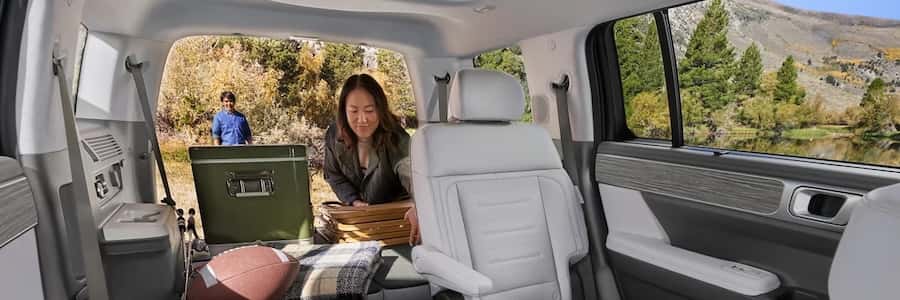
The 2026 Hyundai Palisade fits larger households requiring maximum passenger space for up to eight adults and expanded cargo room, while the 2026 Hyundai Santa Fe best suits families of up to seven who prioritize easier suburban parking and exceptional fuel economy up to an EPA-estimated 36 mpg combined in its hybrid trim. Choosing between them depends on whether your daily routine requires an eighth seat and maximum towing capacity or superior gas mileage in a slightly more compact footprint.
Finding the right family vehicle comes down to matching cabin dimensions and utility with your weekly driving demands. The 2026 Hyundai Palisade serves as the flagship midsize crossover, built on a longer wheelbase with full-sized proportioning across all three rows. Powered by a standard 3.5-liter V6 engine generating 287 horsepower and 260 lb-ft of torque, it pairs with an 8-speed automatic transmission to deliver smooth highway cruising and strong pull for heavy loads. For households interested in electrification, a new 2.5-liter turbo hybrid powertrain option delivers up to 329 horsepower and 339 lb-ft of torque, giving drivers a strong blend of quick acceleration and fewer stops at the pump.
The 2026 Hyundai Santa Fe takes a distinct, boxy design approach that maximizes vertical storage space while retaining nimble maneuverability. Under its hood, a standard 2.5-liter turbocharged 4-cylinder engine puts out 277 horsepower and 311 lb-ft of torque through an 8-speed automatic transmission, offering energetic low-end response for merging and passing. Families focusing on long-term fuel savings often look directly to the Santa Fe Hybrid, which pairs a 1.6-liter turbocharged 4-cylinder engine with an electric motor to generate 231 horsepower while maintaining high efficiency in stop-and-go traffic.
When setting up car seats, trunk gear, and beach equipment for outings along Atlantic Avenue in Delray Beach, those extra interior inches make a noticeable difference. The Palisade gives you up to about 87 cubic feet of total cargo space and comfortable seating for eight, whereas the Santa Fe offers about 80 cubic feet of maximum cargo volume with seating configurations for six or seven.
If you are ready to explore your options, you can explore our new Hyundai Palisade inventory or view our new Hyundai Santa Fe inventory online. Our finance center can also help you apply for financing before visiting our showroom to test drive new Hyundai SUVs. You can also browse our complete new inventory or call our team directly at (561) 462-1991 to compare trim features side by side.
Is the 2026 Hyundai Palisade Bigger Than the 2026 Hyundai Santa Fe?
At nearly 199 inches long, the 2026 Hyundai Palisade offers more room than the Santa Fe, which measures around 190 inches, making it the larger option for families needing extra space. This extra length translates directly into expanded passenger volume, a broader stance at 78 inches wide, and wider hip and shoulder room across all three seating rows.
In terms of interior accommodations, the Palisade provides a standard eight-passenger layout on entry trims like the SE and SEL, with available second-row captain’s chairs reducing capacity to seven on higher trims such as the Limited and Calligraphy. Second-row passengers enjoy roughly 43 inches of legroom, while the third row provides approximately 31 inches of legroom, making the back row suitable for teenagers and adults on longer trips.
The Santa Fe utilizes its boxier, upright frame to maximize headroom, but its physical footprint remains slightly more compact. It seats six or seven passengers across available trims, including the rugged XRT and top-tier Calligraphy. Second-row legroom is generous at about 42 inches, while third-row legroom measures 30 inches. That back row accommodates children and younger teens easily, though full-grown adults may find it snug during extended highway travel.
Families comparing both models on our showroom floor usually check third-row legroom and the rear fold sequence before discussing power specs. The Palisade’s wider rear doors make installing bulky, rear-facing child safety seats simpler, while its extra overall width allows three car seats or boosters to fit across the second-row bench more comfortably than in narrower midsize crossovers.
Which 3-Row SUV Is Better for Suburban Commuting and Daily Fuel Economy?
The 2026 Hyundai Santa Fe is better suited for daily suburban commuting due to its smaller turning radius and superior fuel economy, particularly when equipped with its hybrid powertrain. Returning up to an EPA-estimated 36 mpg combined in front-wheel-drive hybrid models, the Santa Fe dramatically cuts down fuel expenditures for stop-and-go traffic compared to traditional gas V6 crossovers.
Navigating tight parking structures and crowded shopping centers near Mizner Park in Boca Raton is noticeably easier in the Santa Fe. Its trim 190-inch exterior profile makes parallel parking and quick garage maneuvers effortless, while the standard 2.5-liter turbocharged 4-cylinder engine delivers prompt off-the-line torque. Front-wheel-drive gas models achieve an EPA-estimated 20 mpg city / 29 mpg highway / 24 mpg combined, while specifying HTRAC All Wheel Drive adjusts numbers slightly to 20 mpg city / 28 mpg highway / 23 mpg combined.
The 2026 Hyundai Palisade prioritizes effortless V6 power and heavy-duty utility over ultimate urban fuel economy. Its naturally aspirated 3.5-liter V6 engine earns an EPA-rated 21 mpg combined in front-wheel drive and 20 mpg combined with HTRAC All Wheel Drive. For drivers who want midsize passenger capacity alongside higher efficiency, the 2.5-liter turbo hybrid powertrain Palisade targets over 30 mpg on the highway and 28 mpg combined.
Both crossovers include long-term warranty protection to safeguard your purchase over thousands of miles. Hyundai backs every new model with America’s Best Warranty, featuring a 10-year/100,000-mile powertrain limited warranty and a 5-year/60,000-mile new vehicle limited warranty. This extensive coverage provides strong peace of mind for daily commuters who accumulate high annual mileage.
Palisade vs Santa Fe for Family Road Trips and Cargo Capacity
The 2026 Hyundai Palisade excels on extended family road trips by offering about 87 cubic feet of maximum cargo capacity and 19 cubic feet of storage behind the third row, outspacing the Santa Fe’s about 80 cubic feet total and 15 cubic feet behind row three. That extra about 4.5 cubic feet behind the third row allows families to load full-sized suitcases, coolers, and strollers simultaneously without needing to fold down passenger seats.
When pulling recreation equipment for weekend getaways, the Palisade provides higher standard pulling power. Equipped with its V6 engine and heavy-duty cooling, the Palisade features a maximum towing capacity of up to 5,000 pounds when properly equipped. This rating easily handles single-axle camper trailers, boats, or utility trailers loaded with recreation gear.
The Santa Fe offers an exceptionally wide rear tailgate opening that creates an effective outdoor staging area at campsites or sporting events. Standard gas trims offer up to 3,500 pounds of towing capacity, which is sufficient for light pop-up campers or small personal watercraft. For off-road enthusiasts, the Santa Fe XRT trim elevates ground clearance to 8.3 inches and adds all-terrain tires, giving it extra capability on unpaved trails and dirt roads.
Long-distance highway travel highlights structural differences between the two cabins. The Palisade’s extended 116.9-inch wheelbase creates a settled, cushioned ride over rough pavement, isolating road expansion joints effectively. Available power-folding third-row seats allow drivers to reconfigure the cargo floor with a single button push from the rear hatch area.
In-Vehicle Entertainment, SmartSense Safety, and Long-Drive Front Seat Comfort
Both three-row SUVs come standard with the comprehensive Hyundai SmartSense suite of driver-assistance technologies, while the 2026 Hyundai Palisade offers elevated front-seat luxury on long drives with available Ergo-Motion driver seats featuring posture massage functions. Advanced safety systems in both models include Forward Collision-Avoidance Assist, Lane Keeping Assist, Driver Attention Warning, and Blind-Spot Collision Warning.
Cabin entertainment technology centers on large display interfaces with dual Bluetooth phone pairing, Wi-Fi hotspot capability, and passenger voice controls. High-tier trims in both vehicles offer a premium Bose audio system that delivers crisp sound isolation across all three seating rows. Driver communication tools like Passenger Talk act as an in-cabin intercom system, allowing front passengers to speak directly to rear seats through the speakers without shouting.
Front seat comfort is a major highlight for parents spending hours behind the wheel. The Palisade’s available Ergo-Motion seating uses internal air cells to adjust pelvic support and reduce lower back fatigue during long highway stints. Power-adjustable side bolsters automatically tighten in sport driving modes to keep the driver centered and comfortable.
Climate control efficiency is tailored for warm climates, featuring multi-zone automatic temperature settings and rear ceiling vents that cool down the second and third rows quickly after the vehicle has been parked in direct sunlight. Vent placement ensures cold air circulates evenly throughout the entire cabin space without blowing directly on passengers’ faces.
Common Questions About Choosing Between the 2026 Palisade and Santa Fe
Q: Does the 2026 Hyundai Santa Fe Hybrid require a plug-in charger?
The 2026 Hyundai Santa Fe Hybrid is a conventional hybrid system that never requires a plug-in charger. The vehicle recharges its electric battery onboard using regenerative braking during deceleration and generator power from the engine while driving. You simply fill up at any standard gas station while enjoying an EPA-estimated 36 mpg combined fuel economy without changing your daily routine.
Q: How much can the 2026 Hyundai Palisade tow compared to the Santa Fe?
When properly equipped, the 2026 Hyundai Palisade offers a maximum towing capacity of up to 5,000 pounds thanks to its robust 3.5-liter V6 engine. The standard 2026 Hyundai Santa Fe with the 2.5-liter turbocharged 4-cylinder engine provides a maximum towing capacity of 3,500 pounds. Families planning to tow larger travel trailers or ski boats will benefit from the Palisade’s higher rating.
Q: Can full-grown adults sit comfortably in the third row of both SUVs?
The Palisade’s third row offers roughly 31 inches of legroom and wider shoulder dimensions, making it comfortable for adults and teenagers on mid-to-long highway journeys. The Santa Fe provides 30 inches of third-row legroom, which works exceptionally well for children and pre-teens, though full-sized adults may find it best suited for shorter trips around town.
Q: What is the main difference in ground clearance between these models?
Standard trims of both the Santa Fe and Palisade offer approximately 7.0 inches of ground clearance for smooth highway performance and routine suburban driving. However, the off-road-styled Santa Fe XRT increases ground clearance to 8.3 inches and adds all-terrain tires, giving it an edge for navigating unpaved trail heads and rough terrain.
Q: What documents should buyers bring when preparing to purchase a 3-row SUV?
To streamline your purchase experience, bring a valid driver’s license, your current auto insurance card, and proof of income such as recent pay stubs if applying for financing. If you plan to trade in your current vehicle, bring the vehicle’s title, current registration, and all set keys. You can learn more about our dealership and our streamlined buying process before your visit.
0 comment(s) so far on 2026 Hyundai Palisade vs 2026 Hyundai Santa Fe: Which 3-Row SUV Fits Your Family?