

Santa Cruz or Maverick? Picking the Small Truck That Fits Delray Life
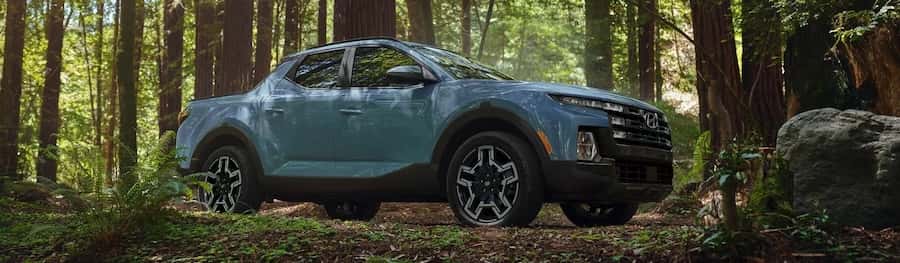
The compact pickup truck segment has experienced a massive surge in popularity because modern buyers want the daily comfort of an SUV paired with the open-bed utility of a truck. If you are trying to decide between the 2026 Hyundai Santa Cruz and the 2026 Ford Maverick, your choice will ultimately depend on how you plan to use your vehicle. The Maverick leans heavily into a traditional, utilitarian truck aesthetic with a boxy shape and basic interior materials. The Santa Cruz, by contrast, behaves like a premium sport adventure vehicle, delivering a refined cabin, sophisticated road manners, and an upscale design that looks right at home parked near the bustling arts district of Delray Beach.
For local drivers who spend their weekends loading up paddleboards, beach gear, or coolers for an afternoon near the Intracoastal Waterway, the daily driving experience matters just as much as open-bed utility. The Santa Cruz offers a composed ride that easily handles daily highway commutes and tight parking spaces, whereas the Maverick can feel a bit unrefined and rocky over uneven pavement.
If you want to experience the premium cabin and flexible cargo options of the Santa Cruz firsthand, we invite you to visit our showroom. You can easily find directions to Delray Hyundai online or give our sales team a quick call to check our current vehicle availability and schedule a test drive.
Comparing the Performance and Real-World Acceleration of the Santa Cruz and Maverick
Are you wondering how these two trucks compare when you merge onto the highway or pass slow-moving traffic? The performance profiles of these two vehicles reveal very different engineering priorities. The 2026 Hyundai Santa Cruz offers two distinct powertrains: a standard 2.5L naturally aspirated four-cylinder engine making 191 hp and 181 lb-ft of torque, and a potent 2.5L turbocharged engine generating 281 hp and 311 lb-ft of torque. Both engines are paired with a smooth 8-speed automatic transmission, which replaces the previous dual-clutch unit on turbo trims to provide consistent power delivery and smoother low-speed drivability.
The Ford Maverick offers a standard hybrid setup making 191 horsepower or an optional 2.0-liter EcoBoost turbo engine that produces 250 horsepower and 280 lb-ft of torque. While the Maverick hybrid is highly fuel-efficient, it requires a leisurely 8.4 seconds to accelerate from 0 to 60 mph. Even the turbocharged Maverick, while peppy, cannot match the sheer muscle of the turbocharged Santa Cruz. In real-world driving, the turbocharged Santa Cruz sprinted from 0 to 60 mph in just 6.8 seconds during testing. This rapid acceleration gives drivers immediate confidence when passing or climbing steep highway grades.
The Santa Cruz also provides a more engaging driving dynamic due to its rigid unibody chassis, which is shared with the Tucson SUV. If you would like to learn about our dealership and our commitment to helping you find the perfect vehicle, our team is always ready to explain how these performance dynamics translate to your daily drive. Choosing the standard front-wheel drive on the SE, SEL, or SEL Activity trims provides a balanced, comfortable ride, while upgrading to the XRT or Limited trims grants you standard HTRAC all-wheel drive for maximum traction in all weather conditions.
Engine & Performance
Powertrain specs by trim
| Feature | Limited | SE | SEL | SEL Activity | XRT |
|---|---|---|---|---|---|
| Engine | 2.5L | 2.5L | 2.5L | 2.5L | 2.5L |
| Horsepower | 281 hp | 191 hp | 191 hp | 191 hp | 281 hp |
| Torque | 311 lb-ft | 181 lb-ft | 181 lb-ft | 181 lb-ft | 311 lb-ft |
| Transmission | 8-speed automatic | 8-speed automatic | 8-speed automatic | 8-speed automatic | 8-speed automatic |
| Drivetrain | All-wheel drive | Front-wheel drive | Front-wheel drive | Front-wheel drive | All-wheel drive |
Towing Capacity and How Engine Torque Impacts Your Utility Needs
When it comes to pulling power, the differences between these two compact trucks become even more pronounced. The 2026 Hyundai Santa Cruz is built to handle substantial loads, boasting a maximum towing capacity of up to 5,000 lbs when equipped with the 2.5L turbocharged engine and all-wheel drive. If you opt for the standard 191 hp engine, the Santa Cruz can still tow up to 3,500 lbs. In comparison, the Ford Maverick maxes out at 4,000 pounds of towing capacity, and that is only when you select the turbocharged EcoBoost engine and add optional towing packages.
The secret behind the towing dominance of the Santa Cruz is its superior torque. The turbocharged Santa Cruz delivers 311 lb-ft of torque at low engine speeds, which is crucial for pulling a heavy trailer up a boat ramp or keeping up with highway traffic while towing. This high torque output reduces strain on the engine and transmission, ensuring a more relaxed and controlled towing experience.
While the Maverick offers an optional integrated trailer brake controller from the factory, the Santa Cruz requires an aftermarket controller to utilize its full 5,000-pound capacity. However, the extra 1,000 pounds of towing capability in the Santa Cruz opens up a wider range of possibilities, allowing you to easily tow small camper trailers, utility trailers, or personal watercraft without pushing your vehicle to its absolute mechanical limits.
Dimensions & Capacity
Capacity and dimensions by trim
| Feature | Limited | SE | SEL | SEL Activity | XRT |
|---|---|---|---|---|---|
| Seating | 5 | 5 | 5 | 5 | 5 |
| Cargo | 27.0 cu ft | 27.0 cu ft | 27.0 cu ft | 27.0 cu ft | 27.0 cu ft |
| Curb weight | 4,191 lbs | 3,779 lbs | 3,805 lbs | 3,900 lbs | 4,140 lbs |
| Towing | 5,000 lbs | 3,500 lbs | 3,500 lbs | 3,500 lbs | 5,000 lbs |
| Payload | 1,411 lbs | 1,411 lbs | 1,411 lbs | 1,411 lbs | 1,411 lbs |
Evaluating Bed Dimensions and Clever Cargo Storage Innovations
A truck is only as useful as its bed, and both of these vehicles offer highly creative solutions for maximizing their compact footprints. The Ford Maverick features a slightly longer bed at 54.4 inches, compared to the 52.1 inches bed length of the Santa Cruz. However, the Santa Cruz compensates for this minor length difference by offering a much more sophisticated, secure, and weather-resistant cargo area out of the box.
The bed of the Santa Cruz is constructed from a highly durable composite material that resists dents and scratches, eliminating the need for an aftermarket bedliner. It also features a lockable, under-bed storage compartment with a built-in drain plug. This compartment is perfect for storing wet beach gear, muddy hiking boots, or even ice and drinks for a weekend tailgate.
Additionally, the Santa Cruz offers an available integrated sliding tonneau cover that retracts easily, allowing you to secure valuable tools or luggage in a waterproof compartment. Heavy-duty cargo tie-down cleat rails and a built-in 115-volt power outlet in the bed wall further enhance the utility of the Santa Cruz, making it an incredibly versatile companion for both work and play.
Standard Safety Tech and Driver Assistance Features Compared
Modern safety technology is a major priority for today’s truck buyers, and both manufacturers have equipped these compact pickups with advanced driver-assist suites. Every 2026 Hyundai Santa Cruz comes standard with a robust suite of safety technologies designed to prevent collisions and reduce driver fatigue. This includes forward collision-avoidance assist, lane keeping assist, and blind-spot collision-avoidance assist.
The Ford Maverick features the standard Ford Co-Pilot360 suite, which includes basic pre-collision assist and automatic emergency braking. However, many of the Maverick’s most desirable driver aids, such as adaptive cruise control and blind-spot monitoring, are locked behind expensive option packages or reserved exclusively for the most expensive trim levels.
With the Santa Cruz, premium safety features are much more accessible. Upper trims feature a brilliant 360-degree surround-view parking camera and a blind-spot view monitor that projects a live camera feed of your blind spot directly onto the digital instrument cluster when you activate your turn signal. This high-tech integration provides peace of mind when navigating crowded parking lots or changing lanes on busy multi-lane highways.
Analyzing Overall Purchase Price, Trim Value, and Warranty Protection
Value is about more than just the initial sticker price; it is about what you get for your money over years of ownership. The 2026 Ford Maverick has a lower starting price on its base XL trim, but that base model features a very basic interior dominated by hard plastics and manual seat adjustments. The 2026 Hyundai Santa Cruz lineup starts with the SE at a base MSRP of $29,750 with a destination charge of $1,600. For buyers looking for the ultimate blend of comfort, technology, and value, the SEL Activity trim starts at $34,450 and comes standard with heated front seats, a digital instrument panel, a wireless smartphone charger, and an integrated bed tonneau cover.
When you look at the long-term ownership costs, the Santa Cruz establishes a clear advantage with its industry-leading warranty coverage. Every new Santa Cruz is backed by a 10-year/100,000-mile powertrain warranty and a 5-year/60,000-mile basic warranty. The Ford Maverick only offers a standard 3-year/36,000-mile basic warranty and a 5-year/60,000-mile powertrain warranty. Hyundai also includes three years or 36,000 miles of complimentary maintenance, which adds to its ownership appeal.
Pricing
Pricing by trim
| Feature | Limited | SE | SEL | SEL Activity | XRT |
|---|---|---|---|---|---|
| Base MSRP | $43,700 | $29,750 | $31,400 | $34,450 | $41,350 |
Quick Answers to Common Small Truck Buying Questions
Q: Does the 2026 Hyundai Santa Cruz offer a hybrid powertrain? <A: Currently, the 2026 Santa Cruz is powered exclusively by its two 2.5-liter gasoline engine options. While it does not offer a hybrid setup like the Maverick, the Santa Cruz focuses on delivering superior towing capacity, higher horsepower, and a more refined, quiet cabin experience. For those interested in other highly efficient options, we carry a wide variety of new Hyundai hybrids and EVs at our dealership.
Q: How does the interior passenger space compare between these two trucks? <A: Both trucks feature a four-door crew-cab configuration with seating for up to five passengers. The Santa Cruz offers a more spacious and comfortable cabin with about 102 cubic feet of passenger volume and highly adjustable front seats. While rear-seat legroom is cozy in both vehicles, the Santa Cruz features more premium materials and supportive cushioning, making it feel much more like a refined crossover than a basic work truck.
Q: What are the off-road capabilities of the Santa Cruz? <A: With a ground clearance of 8.6 inches and the available HTRAC all-wheel-drive system, the Santa Cruz is highly capable on dirt roads, sandy trails, and slippery boat ramps. The rugged XRT trim level adds unique styling elements, underbody protection, and standard all-wheel drive, making it the perfect choice for outdoor enthusiasts who enjoy camping and exploring coastal trails.
Q: Is the bed of the Santa Cruz large enough to carry plywood? <A: Yes, the Santa Cruz’s bed dimensions and design allow it to carry standard plywood sheets comfortably, making it suitable for various home improvement and construction projects.>
Prices and MSRP referenced in this article are estimates for informational purposes only and do not constitute an offer to sell. See dealer for complete details. Fuel economy estimates shown may differ from official EPA ratings and should not be relied upon as a guarantee of actual vehicle performance.
0 comment(s) so far on Santa Cruz or Maverick? Picking the Small Truck That Fits Delray Life