

Hyundai SmartSense Explained: Safety Features South Florida Drivers Should Know
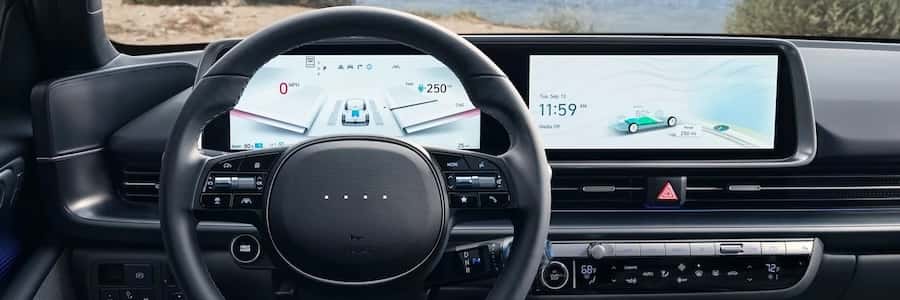
The daily drive along the southeastern coast of Florida presents a unique set of challenges. Navigating the dense, fast-moving traffic on major coastal corridors requires constant vigilance, especially when sudden afternoon rainstorms compromise visibility. Drivers traveling between busy downtown districts and residential neighborhoods frequently encounter abrupt lane mergers, unexpected pedestrian crossings, and crowded parking areas. To mitigate these daily hazards, Hyundai developed a comprehensive network of advanced safety and driver-assist technologies designed to act as an extra set of eyes on the road.
This suite of active safety systems utilizes a sophisticated array of radar sensors, front-facing cameras, and ultrasonic detectors to monitor the vehicle’s surroundings constantly. By analyzing real-world driving conditions in real time, the technology can anticipate potential hazards, issue clear visual and audible alerts, and take corrective braking or steering action when necessary. For families, daily commuters, and seasonal visitors alike, this proactive approach to safety provides invaluable peace of mind during every journey.
If you are ready to experience these advanced safety systems firsthand on a test drive, you can easily find our showroom location and explore our extensive vehicle lineup. Our dedicated sales team is prepared to demonstrate how these features operate in real-world scenarios. To speak with a representative directly about our current vehicle availability or to schedule an appointment, feel free to give us a quick call today.
What is Hyundai SmartSense and Which Safety Features Are Included for 2026?
Hyundai SmartSense is the manufacturer’s proprietary suite of advanced driver assistance systems (ADAS). For the 2026 model year, this network of safety technologies has been refined to offer more seamless intervention and higher levels of situational awareness. The suite is divided into driving safety, driving convenience, parking safety, and parking convenience features. By integrating these systems, vehicles can actively assist with the most tedious and unpredictable aspects of daily travel.
The core driving safety technologies included for 2026 consist of Forward Collision-Avoidance Assist, Lane Keeping Assist, Blind-Spot Collision-Avoidance Assist, and High Beam Assist. On the convenience side, features like Smart Cruise Control with Stop & Go and Highway Driving Assist help reduce driver fatigue during extended trips. Parking safety is elevated by systems such as Rear Cross-Traffic Collision-Avoidance Assist and Reverse Parking Collision-Avoidance Assist, while Remote Smart Parking Assist offers next-generation convenience by allowing the vehicle to guide itself into tight spaces.
Selecting a vehicle equipped with these advanced safety features represents a smart long-term investment in your family’s security and your vehicle’s future resale value. To streamline your purchasing process and explore competitive financing options tailored to your budget, you can apply for financing online before visiting our dealership. Our finance specialists work with a wide range of credit profiles to secure favorable terms on our newest models.
How Forward Collision-Avoidance Assist with Pedestrian Detection Protects You
Among the most critical components of the protective suite is Forward Collision-Avoidance Assist with Pedestrian Detection. This system is engineered to prevent or mitigate the severity of frontal impacts. It continuously scans the road ahead using a combination of a high-resolution windshield camera and a front-mounted radar sensor. By calculating the distance and relative speed of objects in your path, the system can detect stopped vehicles, slow-moving traffic, pedestrians, and in some configurations, cyclists.
When the sensors identify a potential collision hazard, the system executes a multi-stage intervention protocol:
- Visual and Audible Alerts: The vehicle immediately sounds a warning tone and displays a prominent alert on the instrument cluster to prompt the driver to brake.
- Braking Preparation: The system primes the braking system, optimizing brake pressure so that when the driver presses the pedal, maximum stopping force is applied instantly.
- Emergency Braking: If the driver fails to respond to the warnings and a collision is imminent, the system can automatically apply the brakes to bring the vehicle to a complete stop or significantly reduce the speed of impact.
To secure a modern vehicle with this vital protective technology, you can take the first step toward ownership and apply for financing through our secure online portal. Getting pre-approved saves valuable time at the dealership, allowing you to focus entirely on choosing the right model and trim level for your needs.
Navigating I-95 with Hyundai Highway Driving Assist and Lane Management
Commuting on fast-paced South Florida highways like I-95 demands exceptional concentration due to heavy traffic volumes and frequent lane changes. To make these high-speed journeys more manageable, Hyundai offers Highway Driving Assist, a Level 2 semi-autonomous driving system. This technology combines the capabilities of Smart Cruise Control with Stop & Go and Lane Following Assist to help control the vehicle’s speed and steering on federal and state highways.
When active, Highway Driving Assist utilizes GPS navigation data and onboard sensors to maintain a safe, preset distance from the vehicle directly ahead. It automatically adjusts your speed to match traffic flow, even bringing the vehicle to a complete stop in heavy congestion and resuming acceleration when traffic moves again. Simultaneously, the system monitors lane markings to provide continuous, gentle steering inputs, keeping the vehicle centered in its lane. The advanced Highway Driving Assist 2 system adds semi-automatic lane-changing capabilities, initiating a safe lane change when the driver taps the turn signal stalk.
Complementing these systems are two distinct lane management technologies: Lane Keeping Assist and Lane Following Assist. While they sound similar, they serve different functions. Lane Keeping Assist acts as a safety net; it remains passive until it detects the vehicle drifting toward or over a lane marker without a turn signal, at which point it delivers an audible warning and applies corrective steering torque to nudge the vehicle back. In contrast, Lane Following Assist is an active convenience feature that operates continuously when switched on, actively steering to keep the vehicle centered in the lane even through gentle highway curves.
Smart Parking Innovations: Remote Smart Parking Assist and Rear Traffic Detection
Parking in crowded coastal shopping centers or tight downtown parallel spots can be a stressful experience. Hyundai addresses these challenges with intelligent parking systems that take the difficulty out of tight spaces. A prime example is Remote Smart Parking Assist, a technology that allows drivers to park or retrieve their vehicle while standing completely outside of it. Using the buttons on the smart key fob, the driver can command the vehicle to pull straight forward or back out of a narrow space, which is ideal when adjacent vehicles park too close to allow the doors to open.
For even more advanced capability, Remote Smart Parking Assist 2 can actively identify suitable parallel or perpendicular parking spaces. Once a spot is selected, the system can automatically control the steering, speed, and gear shifts to park the vehicle, whether the driver is sitting inside the cabin or controlling the maneuver from the sidewalk.
To prevent parking lot collisions, Rear Cross-Traffic Collision-Avoidance Assist monitors the area behind the vehicle when reversing. While backing out of a driveway or a spot at a busy beach park, the system’s radar sensors detect vehicles approaching from either side. If a vehicle is detected, the system alerts the driver with visual indicators in the side mirrors and an audible alarm. If the driver does not brake, the system can automatically apply the brakes to prevent a collision.
Safe Exit Assist vs Safe Exit Warning: Key Differences for Families
For parents parking along busy streets, passenger safety during egress is a paramount concern. Hyundai pioneered specialized exit technologies to prevent occupants from stepping into the path of oncoming traffic. It is important to understand the operational differences between Safe Exit Warning and Safe Exit Assist, as they provide different levels of physical intervention.
Safe Exit Warning is an alert-based system. When the vehicle is parallel parked and an occupant attempts to open a door, the rear-facing radar sensors scan the adjacent lane for oncoming vehicles or cyclists. If a hazard is detected, the system sounds an audible warning tone and flashes a visual alert on the instrument cluster, prompting the occupants to remain inside until the vehicle passes.
Safe Exit Assist builds upon this warning by adding active physical prevention. If the system detects an approaching vehicle from behind, it not only issues audible and visual warnings but also overrides manual door unlocking. It actively keeps the Electronic Child Safety Locks engaged, preventing rear passengers from opening the doors until the hazard has safely passed. This physical safeguard is especially valuable for families traveling with young children who might otherwise open a door without looking.
Common Questions About the 2026 Hyundai SmartSense Safety Suite
Q: Is the Hyundai SmartSense safety suite standard on all 2026 models?
A: Core safety technologies, including Forward Collision-Avoidance Assist and Lane Keeping Assist, are standard equipment across almost the entire lineup. However, advanced convenience and parking features like Highway Driving Assist 2 and Remote Smart Parking Assist 2 are typically reserved for premium trim levels, such as the Calligraphy or Limited models.
Q: Can I temporarily disable or customize specific SmartSense alerts?
A: Drivers can customize the behavior, warning volume, and sensitivity of individual safety features through the central touchscreen infotainment menu. You can choose to have certain systems provide warnings only, actively assist with steering or braking, or turn them off completely if preferred for specific driving conditions.
Q: How does the system handle driving in heavy rain or severe weather?
A: Heavy downpours can occasionally obstruct the windshield camera or interfere with radar sensors, which may temporarily limit system functionality. If the sensors are blocked, the vehicle will display a clear message on the instrument cluster advising the driver that certain features are temporarily unavailable, restoring them automatically once conditions clear.
Q: Does the driver need to keep their hands on the wheel when using Highway Driving Assist?
A: Yes, Highway Driving Assist is a Level 2 semi-autonomous system, not a fully hands-free driving system. It requires the driver to keep their hands on the steering wheel and remain fully attentive to the road, and it will issue escalating alerts if it detects a lack of steering wheel feedback.
To learn more about how our vehicles perform in real-world conditions, you can learn about our dealership and our commitment to helping South Florida drivers find safe, reliable transportation.
0 comment(s) so far on Hyundai SmartSense Explained: Safety Features South Florida Drivers Should Know