

Hyundai Brake Service in Delray Beach, FL
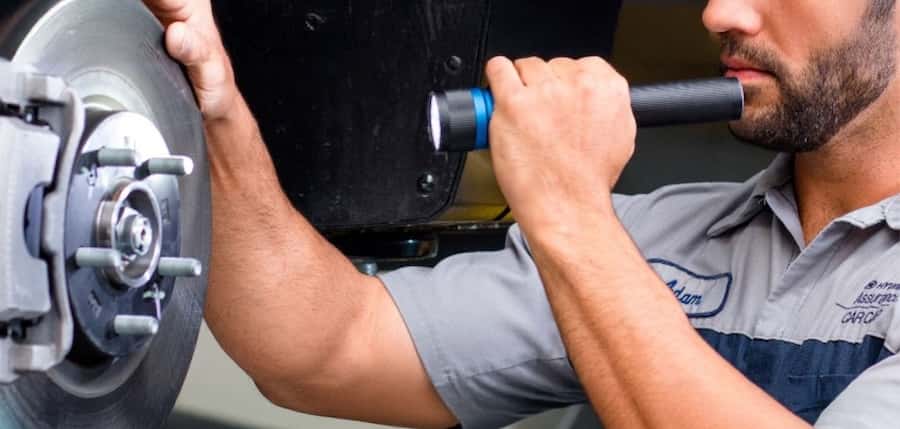
You should get your Hyundai brakes serviced at an authorized dealership service center equipped with factory-trained technicians, specialized diagnostic equipment, and genuine original equipment manufacturer parts designed for your vehicle’s exact engineering specifications. Authorized dealership centers ensure proper braking system calibration, protect existing factory warranty coverage, and maintain complete vehicle maintenance records.
Braking systems in modern vehicles do far more than simply bring wheels to a stop. Modern Hyundai models rely on complex hydraulic and electronic networks that integrate directly with driver-assist technologies such as Forward Collision-Avoidance Assist and electronic stability controls. Servicing these systems requires precise diagnostic tools capable of recalibrating sensor thresholds and checking hydraulic pressure against exact factory tolerances. Generic tools often lack the software depth required to clear electronic parking brake service modes or read proprietary anti-lock braking fault codes accurately.
In coastal environments like Delray Beach, humid salt air can cause rapid surface oxidation on iron brake rotors during extended parking, while stop-and-go driving along Atlantic Avenue increases heat cycling and pad friction wear. Having certified technicians inspect your pads, rotors, and calipers during routine service intervals helps catch localized pitting or hardware corrosion before it compromises overall stopping power.
Our team provides comprehensive maintenance designed specifically for your model. You can view our service center location at 655 Ne 6th Ave or get in touch by calling our service department directly at (561) 462-1991 to speak with an advisor about your vehicle’s braking performance.
What Brake Services Are Offered at Hyundai Service Centers?
Authorized Hyundai service centers offer complete braking maintenance and repair services, including multi-point inspections, front and rear brake pad replacements, rotor resurfacing or replacement, brake fluid flushing, caliper maintenance, and electronic anti-lock system diagnostics. Every service uses manufacturer-approved fluid specifications and components engineered for specific vehicle platforms.
During a routine multi-point inspection, technicians conduct both visual and precision measurement checks across the entire hydraulic system:
- Measuring friction lining thickness on inner and outer brake pads to track wear rates against minimum safety thresholds.
- Measuring brake rotor thickness with precision micrometers and inspecting disc surfaces for scoring, heat cracks, or deep rust pitting.
- Checking brake calipers, slide pins, rubber dust boots, and flexible hydraulic hoses for fluid leaks, sticking slides, or structural cracking.
- Testing brake fluid condition in the master cylinder reservoir for moisture accumulation and verifying that levels rest securely between MIN and MAX indicators.
When brake pads wear down, technicians install fresh pads and evaluate whether the brake rotors can be resurfaced on a precision lathe or must be replaced. Resurfacing restores a flat, smooth friction surface if the rotor retains sufficient material above its stamped minimum thickness limit. If rotors are thin or heavily warped, full rotor replacement is performed to prevent thermal fading and pedal pulsation.
Brake fluid replacement is another vital service. Hydraulic fluid absorbs atmospheric moisture over time, lowering its boiling point and increasing the risk of internal corrosion within metallic lines and internal caliper pistons. Service guidance specifies flushing contaminated fluid completely and replacing it with fresh DOT 3 or DOT 4 fluid as specified in your owner’s manual without mixing fluid formulations. If warning indicators illuminate—such as a steady Anti-lock Braking System light—technicians utilize factory diagnostic computers to scan control modules, check wheel speed sensor data, and repair hydraulic control valves.
OEM Hyundai Brake Pads vs. Aftermarket Options: Dealership vs. Independent Repair Shops
Original equipment manufacturer Hyundai brake pads are engineered specifically for your model’s weight, caliper dimensions, and rotor friction requirements, delivering consistent stopping distances, lower brake dust levels, and quieter operation compared to generic aftermarket alternatives. Servicing your vehicle at an authorized dealership guarantees factory-certified technicians install genuine components, whereas independent repair shops frequently utilize non-standardized aftermarket parts to reduce material costs.
Aftermarket brake pads are manufactured using standardized ceramic, semi-metallic, or organic compounds formulated to fit wide ranges of vehicle makes and models. Because these pads are not optimized for a single vehicle weight or hydraulic bias, they can produce excessive squealing, accelerated rotor surface wear, or uneven pad material transfer. OEM friction pads utilize precise chamfers, slots, and multi-layer noise-dampening shims designed for exact caliper carrier tolerances.
Our technicians routinely observe that commuters driving along congested routes near Boca Raton ask whether aftermarket pads save money over time, but aftermarket compounds often lack the exact fitment of genuine components, leading to premature pad wear and vibration. Independent repair shops may offer lower hourly labor rates, but they often lack model-specific diagnostic equipment, factory service bulletins, and specialized rotor resurfacing lathes calibrated to exact manufacturer dimensions.
By choosing dealership care, every installation utilizes components sourced directly through our genuine OEM Hyundai parts department. This ensures that every replacement pad, rotor, retaining clip, and caliper seal matches the exact factory quality standards established when your vehicle was assembled.
Does Hyundai Warranty and Complimentary Maintenance Cover Brake Pads and Rotors?
Hyundai brake pads and rotors are classified as normal wear-and-tear items and are covered under a 12-Month/12,000-Mile Replacement Wear Item Warranty for defects in factory materials or workmanship. Standard routine care under 3-Year/36,000-Mile Hyundai Complimentary Maintenance includes visual multi-point brake inspections during scheduled visits, but does not cover the routine replacement cost of worn friction pads or rotors.
The 12-Month/12,000-Mile Replacement Wear Item Warranty protects owners against premature failure caused by manufacturing flaws, such as defective friction bonding, unexpected pad cracking, or premature hardware failure within the initial coverage window. Beyond this period, pad and rotor replacements are considered standard owner maintenance responsibilities, similar to wiper blades or cabin air filters.
Component failures outside of normal friction wear fall under the broader 5-Year/60,000-Mile New Vehicle Limited Warranty. If a non-wear component—such as a defective brake master cylinder, hydraulic proportioning valve, or brake caliper housing—fails due to a factory material or assembly defect during the coverage term, repairs are fully covered at authorized service centers.
To manage ongoing maintenance costs beyond factory coverage windows, owners can opt for extended protection plans. These vehicle service contracts help budget for unexpected mechanical repairs and routine maintenance needs long after initial factory warranties expire.
How to Schedule Hyundai Brake Service Online and What to Confirm Before Booking
You can schedule a Hyundai brake service appointment online by visiting the online scheduling portal on our website, entering your vehicle year, model, and current mileage, selecting a brake inspection or service package, and choosing a convenient calendar time slot. Before confirming your booking, verify the specific braking symptoms your vehicle is exhibiting, confirm part availability for your model, and check for active service special offers.
The online booking tool guides you through several straightforward steps:
- Input your vehicle’s year, model, trim, and approximate odometer reading.
- Select desired services, such as a visual brake inspection, front or rear pad replacement, or hydraulic fluid flush.
- Choose an available date and time slot that fits your schedule, specifying whether you plan to drop off the vehicle or wait in our customer lounge.
- Review contact information and confirm the appointment reservation.
Before finalizing your appointment, take a moment to note specific driving observations so our service advisors can brief the technicians accurately. Note whether you hear high-pitched squealing under light braking, feel vibration in the steering wheel or pedal during highway stops, or experience a soft pedal feel when resting at traffic lights. Additionally, check our website’s service information page prior to write-up for current service details on per-axle brake pad installations, fluid flushes, or multi-point vehicle checks.
Answers to Frequently Asked Questions About Hyundai Brake Service
Q: How often should Hyundai brake pads and rotors be inspected?
Hyundai recommends having your brake system visually inspected during every routine oil change and tire rotation, or at least every 7,500 to 10,000 miles under normal driving conditions. Severe driving conditions, such as frequent stop-and-go traffic or short trip commuting, may accelerate pad wear and require more frequent evaluations. If you notice high-pitched squealing, steering wheel vibration, or increased stopping distance between routine visits, schedule an inspection immediately rather than waiting for your next scheduled maintenance interval.
Q: What causes surface rust to build up on Hyundai brake rotors while parked?
Surface rust forms on cast-iron brake rotors when ambient moisture and salt air react with raw metal surfaces while a vehicle sits parked outdoors. In humid coastal microclimates, light surface oxidation can develop within hours of parking. In most cases, light surface rust sweeps away naturally after the first few gentle braking applications. However, if rust pitting becomes deep or creates persistent pedal vibration during braking, a technician must inspect the rotors to measure minimum thickness and determine if resurfacing or replacement is necessary.
Q: What causes a soft or sinking brake pedal on a Hyundai?
A soft or sinking brake pedal usually indicates air trapped within the hydraulic brake lines, degraded brake fluid that has absorbed atmospheric moisture, or a hydraulic leak in a caliper, hose, or master cylinder. Because hydraulic pressure is required to force brake pads against the rotors, a loss of pedal firmness reduces braking responsiveness and safety. If your brake pedal feels unusually soft or presses further down toward the floorboard than normal, stop driving safely and arrange a professional hydraulic system inspection.
Q: Can mixing DOT 3 and DOT 4 brake fluid damage my Hyundai braking system?
Mixing different types of brake fluid can alter the fluid boiling point and chemical stability, potentially degrading internal seal materials and compromising hydraulic performance. Vehicle manuals specify whether your exact model requires DOT 3 or DOT 4 brake fluid. During a hydraulic fluid flush at our service department, technicians clear out existing fluid completely before refilling and bleeding the system with fresh fluid matching factory specifications. You can learn more about our team and certified service procedures to ensure your braking system receives exact specification maintenance.
Q: Why does the ABS warning light stay illuminated on my dashboard?
An illuminated ABS warning light indicates that the anti-lock braking system control unit has detected a fault in a wheel speed sensor, hydraulic valve, or electronic control module, disabling anti-lock function. While conventional hydraulic braking typically remains operational, anti-lock assistance during emergency stops or slippery conditions will not engage. If both the ABS light and the main red brake system warning light remain on after releasing the parking brake, low brake fluid or hydraulic failure may exist, requiring an immediate professional inspection before driving further.
Prices and MSRP referenced in this article are estimates for informational purposes only and do not constitute an offer to sell. See dealer for complete details.
Fuel economy estimates shown may differ from official EPA ratings and should not be relied upon as a guarantee of actual vehicle performance.
0 comment(s) so far on Hyundai Brake Service in Delray Beach, FL