

2026 Hyundai Tucson vs. Honda CR-V: Power, Comfort, and Warranty Value
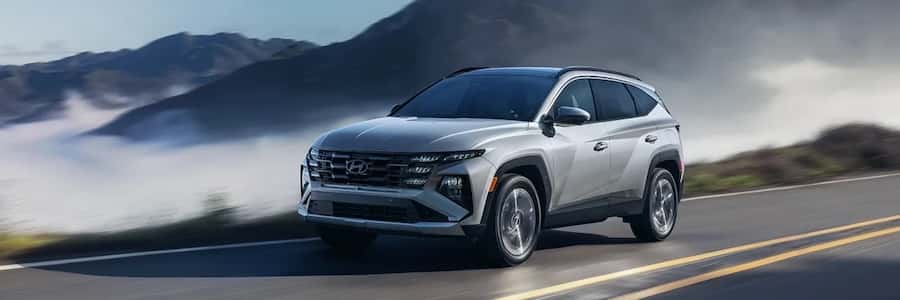
Selecting a compact crossover in South Florida requires balancing daily highway commuting with the unique demands of coastal driving. Buyers frequently cross-shop the market’s top contenders to find the best blend of efficiency, cabin comfort, and long-term value. While both of these popular crossovers offer spacious cabins and modern technology, key differences in their powertrains, safety suites, and warranty coverage quickly set them apart.
When local buyers walk into our showroom to compare these two models, they often ask which one handles the transition from highway speeds to tight downtown parking spots more smoothly. Many local drivers need a vehicle that can transition seamlessly from high-speed merging on the highway to navigating the busy street parking along Atlantic Avenue in Delray Beach, where parallel parking spaces fill up quickly on weekend evenings. Having a vehicle with responsive handling and advanced parking sensors makes these daily driving tasks much less stressful.
To experience these differences firsthand, you can visit our showroom at 655 Ne 6th Ave, Delray Beach, FL 33483 to browse our current selection. If you prefer to speak with a sales representative before driving in, feel free to give our sales team a quick call at (561) 462-1991 to check our current vehicle availability and discuss our latest purchase incentives.
Comparing the Powertrains and Engine Options of the Tucson and CR-V
The performance contrast between these two SUVs begins under the hood, where distinct engineering choices shape how each vehicle delivers power. The standard gasoline-powered version of the Tucson is equipped with a 2.5-liter inline four-cylinder engine that produces 187 horsepower and 178 lb-ft of torque [source: Tulsa Hyundai – 2026 Hyundai Tucson Powertrains, Specs, Prices, MPG & More]. This engine is paired with an 8-speed automatic transmission, providing smooth, predictable gear changes during acceleration.
In comparison, the standard gasoline Honda CR-V uses a 1.5-liter turbocharged gasoline engine that makes 190 horsepower [source: Edmunds – 2026 Honda CR-V Prices, Reviews, and Pictures]. While the horsepower figures are similar, the driving experience differs due to the transmissions. The Honda CR-V utilizes a continuously variable transmission (CVT), which can sometimes create a louder, droning engine note under heavy acceleration. The Tucson’s traditional 8-speed automatic transmission provides a more familiar, stepped gear-shifting feel that many drivers prefer when accelerating from a complete stop.
For those seeking more performance and higher efficiency, the electrified powertrains offer a substantial upgrade. The Tucson Hybrid features a 1.6-liter turbocharged engine paired with an electric motor to generate a combined 231 horsepower and 271 lb-ft of torque. This hybrid setup uses a 6-speed automatic transmission, delivering rapid power delivery. The Honda CR-V Hybrid, by contrast, is rated at 204 horsepower. The extra power in the Tucson Hybrid is particularly noticeable when executing quick passing maneuvers on local roads.
Engine & Performance
Powertrain specs by trim
| Feature | Blue SE | Limited | SE | SEL | SEL Convenience | SEL Plus | SEL Premium | XRT |
|---|---|---|---|---|---|---|---|---|
| Engine | 1.6L | 2.5L | 2.5L | 2.5L | 1.6L | 2.5L | 2.5L | 2.5L |
| Horsepower | 231 hp | 187 hp | 187 hp | 187 hp | 231 hp | 187 hp | 187 hp | 187 hp |
| Torque | 271 lb-ft | 178 lb-ft | 178 lb-ft | 178 lb-ft | 271 lb-ft | 178 lb-ft | 178 lb-ft | 178 lb-ft |
| Transmission | 6-speed automatic | 8-speed automatic | 8-speed automatic | 8-speed automatic | 6-speed automatic | 8-speed automatic | 8-speed automatic | 8-speed automatic |
| Drivetrain | All-wheel drive | Front-wheel drive | Front-wheel drive | Front-wheel drive | All-wheel drive | Front-wheel drive | Front-wheel drive | Front-wheel drive |
Beat the Heat: Climate and Comfort Features Built for South Florida Summers
Sustained high ambient temperatures and intense humidity define the South Florida driving environment for most of the year, making cabin climate control a primary purchasing consideration. For residents driving home from an afternoon round of golf at one of the country clubs in Boca Raton, getting into a cabin that has been sitting in the direct sun can be incredibly uncomfortable. Quick cabin cool-down capability is a necessity rather than a luxury.
To combat this heat, the Tucson offers dual-zone automatic climate control and available ventilated front seats on its higher trim levels, such as the Limited. These ventilated seats circulate cool air through the perforated upholstery, providing immediate relief from hot leather surfaces. While the Honda CR-V also offers dual-zone climate control, its ventilated seat availability is highly restricted compared to the Tucson, meaning buyers often have to spend significantly more to get the same level of hot-weather comfort.
In addition to climate features, cabin utility plays a major role in daily comfort. The Tucson provides an exceptionally roomy interior with about 39 cubic feet of cargo space behind the second row. Folding the rear seats flat expands this capacity to about 75 cubic feet, which easily accommodates beach gear, golf bags, or large shopping trips. The Honda CR-V offers a similarly sized cargo area, but the Tucson’s low liftover height and flat cargo floor make loading heavy items much easier on your back.
Navigating Heavy Traffic on I-95 with Advanced Hybrid Technology
Stop-and-go congestion on major coastal corridors demands a hybrid system that can maximize efficiency without sacrificing the responsiveness needed to merge safely. The Tucson Hybrid is exceptionally well-suited for these driving conditions. The entry-level Tucson Hybrid Blue SE trim achieves an EPA-estimated 38 mpg city / 38 hwy (or 38 mpg combined), while other hybrid trims like the SEL Convenience are rated at 36 mpg combined.
The Honda CR-V Hybrid delivers up to 43 mpg city in its front-wheel-drive configuration, which does give it a slight edge in pure city fuel economy [source: Edmunds – 2026 Honda CR-V Prices, Reviews, and Pictures]. However, the Tucson Hybrid compensates for this small mileage difference with standard all-wheel drive on its hybrid models and significantly more overtaking power. The Tucson Hybrid’s combined 231 horsepower and 271 lb-ft of torque allow it to accelerate from a standstill much faster than the 204 horsepower CR-V Hybrid.
This extra torque is invaluable when you need to quickly accelerate to match the flow of traffic on highway on-ramps. The Tucson’s hybrid system transitions seamlessly between electric and gasoline power, utilizing the electric motor to provide instant torque the moment you press the accelerator pedal. This responsive power delivery makes navigating heavy traffic feel effortless and controlled.
Highway Driving Assist and Lane Centering Safety Suites Compared
Modern driver-assistance technology acts as an extra set of eyes during daily highway commutes, mitigating the stress of heavy traffic. The Tucson comes standard with a comprehensive suite of active safety technologies, including blind-spot warning, adaptive cruise control, lane-keep assist, forward collision warning, and a driver attention warning system.
For highway commuters, the standout technology is Hyundai’s available Highway Driving Assist. This system combines lane-centering technology with adaptive cruise control to automatically keep the vehicle centered in its lane and maintain a safe distance from the vehicle ahead. It can even adjust the vehicle’s speed based on GPS navigation data and posted speed limits.
The Honda CR-V features the Honda Sensing suite, which includes standard lane-keeping assist and traffic jam assist. While Honda’s system is highly capable, many drivers find that Hyundai’s lane-centering technology operates more smoothly, requiring fewer micro-corrections on the highway. Additionally, the Tucson’s standard blind-spot warning provides clear visual and audible alerts, which is incredibly helpful when navigating multi-lane highways where vehicles frequently change lanes unexpectedly.
Analyzing Starting Prices, Trim Level Values, and Warranty Protection
A side-by-side financial comparison reveals a clear distinction in how much utility and protection each brand packages into its starting MSRP. The entry-level gasoline-powered Tucson SE starts at an MSRP of $29,450. Moving up the lineup, the well-equipped SEL is priced at $30,800, the sporty XRT is $33,475, the premium SEL Premium is $33,800, and the top-tier Limited starts at $39,425. For hybrid shoppers, the entry-level Hybrid Blue SE starts at $32,450, while the Hybrid SEL Convenience is listed at $34,900.
In contrast, the base Honda CR-V LX starts at a higher MSRP of $30,920 [source: Edmunds – 2026 Honda CR-V Prices, Reviews, and Pictures]. Because the Tucson has a lower starting price across its entry trims, buyers can often step up to a mid-level Tucson trim with more advanced technology and comfort features for the same price as a base-level CR-V.
Beyond the initial purchase price, warranty coverage provides long-term peace of mind and protects your investment. Hyundai offers an industry-leading warranty package that far outclasses Honda’s coverage:
- 5-year/60,000-mile New Vehicle Limited Warranty
- 10-year/100,000-mile Powertrain Limited Warranty
- 10-year/100,000-mile battery warranty for hybrid models
- Three years or 36,000 miles of complimentary scheduled maintenance
The Honda CR-V only comes with a 3-year/36,000-mile limited warranty and a 5-year/60,000-mile powertrain warranty, leaving you responsible for major repair costs much sooner.
Pricing
Pricing by trim
| Feature | Blue SE | Limited | SE | SEL | SEL Convenience | SEL Plus | SEL Premium | XRT |
|---|---|---|---|---|---|---|---|---|
| Base MSRP | $32,450 | $39,425 | $29,450 | $30,800 | $34,900 | $31,300 | $33,800 | $33,475 |
Common Questions From South Florida Crossover Shoppers
Q: Does the Tucson Hybrid require a plug-in charger to operate?
A: No, the hybrid model charges its battery automatically through regenerative braking and the gasoline engine while you drive. If you want a model with all-electric driving capability that you can plug in, explore our new Hyundai Tucson Plug-In Hybrid inventory.
Q: What is the warranty coverage on the hybrid battery?
A: Hyundai provides an exceptional 10-year/100,000-mile battery warranty on all electrified models. This industry-leading coverage is designed to give buyers long-term confidence, and you can explore these models in our Shop New Hyundai Hybrids & EVs section.
Q: How does the starting price of the Tucson compare to the CR-V?
A: The entry-level Tucson SE starts at $29,450, which is lower than the base Honda CR-V LX starting price of $30,920. This price difference allows buyers to get more standard features for less money.
Q: Which Tucson trim is recommended for the best balance of features and price?
A: For the standard gasoline model, the SEL Premium trim offers an excellent selection of comfort and tech upgrades. If you prefer the hybrid, the SEL Convenience trim provides a great mix of power and fuel efficiency. Check out our new Hyundai Tucson inventory to compare these trims.
Q: Can I get pre-approved for a purchase before visiting the dealership?
A: Yes, you can easily apply for financing online through our secure portal. This streamlines the buying process so you can spend more time test-driving our new Hyundai SUVs when you arrive.
0 comment(s) so far on 2026 Hyundai Tucson vs. Honda CR-V: Power, Comfort, and Warranty Value