

2026 Hyundai Tucson Hybrid vs 2026 Toyota RAV4 Hybrid: Which Hybrid SUV Should You Choose?
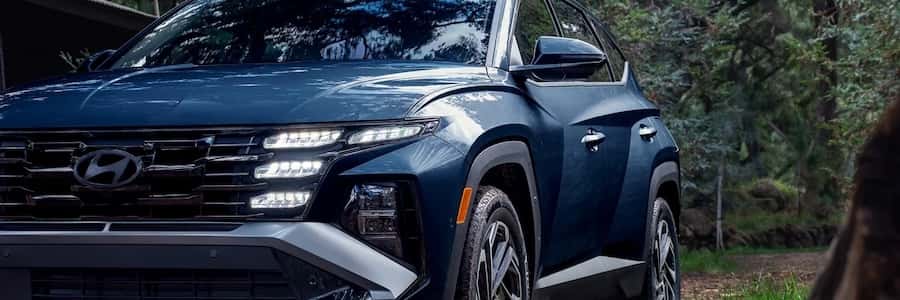
Selecting the ideal hybrid crossover requires weighing immediate value against long-term performance. Drivers navigating the coastal traffic along Atlantic Avenue in Delray Beach need a vehicle that balances fuel efficiency with premium comfort. The 2026 Hyundai Tucson Hybrid and the 2026 Toyota RAV4 Hybrid stand out as the top contenders in this highly competitive segment, each offering distinct advantages for daily commutes and weekend getaways. While Toyota relies on a legacy of hybrid engineering, Hyundai has aggressively updated its crossover with premium standard technology, a more engaging driving dynamic, and competitive starting MSRP.
For the 2026 model year, the Tucson Hybrid Blue SE trim starts at an appealing MSRP of $32,450, undercutting many comparable hybrid crossovers on the market today. Because official 2026 specifications for some competitor models remain pending, comparisons are based on the latest available manufacturer data and are subject to change. To experience these updates firsthand, we welcome you to visit our showroom at 655 Ne 6th Ave, Delray Beach, FL 33483 or give our team a quick call to discuss current availability.
Comparing Powertrains, Horsepower, and On-Road Performance
The driving experience of a modern hybrid is defined by how seamlessly its engine and electric motor interact to deliver smooth and efficient performance. Under the hood, the Tucson Hybrid features a 1.6L turbocharged GDI 4-cylinder engine paired with an electric motor to generate a combined 231 hp and 271 lb-ft of torque [2]. This power is managed by a traditional 6-speed automatic transmission, which provides a crisp, responsive feel during acceleration [2]. In contrast, the RAV4 Hybrid utilizes a 2.5L Atkinson-cycle four-cylinder engine paired with an ECVT [1]. While the ECVT maximizes efficiency, it can sometimes produce a persistent engine drone under hard acceleration, whereas the Tucson Hybrid’s geared automatic mimics the familiar, sportier shifting patterns of a conventional gas vehicle [1, 2].
Handling and traction also differ significantly due to the design of each vehicle’s all-wheel-drive system. The Tucson Hybrid comes standard with mechanical HTRAC All Wheel Drive, utilizing a physical driveshaft to actively distribute power between the front and rear axles based on road conditions [2]. The RAV4 Hybrid employs an electronic on-demand AWD system that relies on a dedicated rear electric motor to power the back wheels when slippage is detected [1]. While both systems provide added confidence on wet roads, the mechanical connection of the Tucson Hybrid offers more consistent, proactive power distribution. Our sales team frequently walks buyers through these differences during test drives to demonstrate how the mechanical system enhances cornering precision.
Engine & Performance
Powertrain specs by trim
| Feature | Blue SE | Limited | SEL | SEL Convenience |
|---|---|---|---|---|
| Engine | 1.6L | 1.6L | 1.6L | 1.6L |
| Horsepower | 231 hp | 231 hp | 231 hp | 231 hp |
| Torque | 271 lb-ft | 271 lb-ft | 271 lb-ft | 271 lb-ft |
| Transmission | 6-speed automatic | 6-speed automatic | 6-speed automatic | 6-speed automatic |
| Drivetrain | All-wheel drive | All-wheel drive | All-wheel drive | All-wheel drive |
Fuel Economy and Real-World Efficiency
Operating a hybrid in a warm climate requires efficient thermal management to protect the battery and maintain peak efficiency. The Tucson Hybrid Blue SE achieves an EPA-estimated 38 city / 38 hwy MPG, utilizing a sophisticated lithium-ion battery system that actively manages temperature during hot summer days [2]. The RAV4 Hybrid delivers an estimated fuel economy ranging from 38 to 41 mpg combined, depending on the trim level [1]. Both vehicles utilize advanced regenerative braking systems to capture kinetic energy during deceleration, sending power back to the battery so you never have to plug in [1, 2].
While the RAV4 Hybrid holds a slight edge in maximum highway fuel economy on paper, the Tucson Hybrid delivers its efficiency alongside a much more robust power output of 231 hp [2]. This balance ensures that drivers do not have to sacrifice passing power or highway confidence to achieve excellent fuel economy. Explore our new Hyundai Tucson inventory to find the right efficiency match. If you prefer a traditional trunk, you can also view our new Hyundai sedans or check out the sleek new Hyundai Elantra inventory.
Fuel Economy
Fuel economy and range by trim
| Feature | Blue SE | Limited | SEL | SEL Convenience |
|---|---|---|---|---|
| MPG | 38 city / 38 hwy / 38 combined | 36 city / 37 hwy / 36 combined | 36 city / 37 hwy / 36 combined | 36 city / 37 hwy / 36 combined |
| Battery (kWh) | 1.49 | 1.49 | 1.49 | 1.49 |
Interior Space, Seating Comfort, and Cargo Volume for Active Lifestyles
Active professionals commuting from Boca Raton often require a cargo hold that can easily transition from golf clubs at local country clubs to weekend beach gear. Interior dimensions reveal a clear advantage for the Tucson Hybrid, which is built on a wheelbase of nearly 109 inches [2]. This extended footprint allows for a highly spacious cabin, offering nearly 108 cubic feet of passenger volume and a generous 41.3 inches of rear legroom [2]. Passengers in the RAV4 Hybrid will find a slightly more confined space, with the vehicle offering about 106 cubic feet of passenger volume and nearly 38 inches of rear legroom [2]. The extra legroom in the Tucson Hybrid makes a substantial difference for growing families and adult passengers on longer drives.
Cargo capacity further emphasizes the Tucson Hybrid’s utility. It provides nearly 39 cubic feet of cargo space behind the second row, which expands to a maximum of 80 cubic feet when the 60/40 split-folding rear seats are laid flat [2]. The RAV4 Hybrid offers about 38 cubic feet behind the second row and up to nearly 70 cubic feet of total cargo volume with the rear seats folded down [1, 2]. Families test-driving the Tucson Hybrid usually ask about the rear seat recline and legroom before they ask about the digital cluster, and they are consistently impressed by how easily the rear seats fold down directly from the cargo area using the remote release levers [2].
To see these spacious layouts in person, you can shop new Hyundai hybrids and EVs today. If you want something sportier, look at our new Hyundai Elantra N inventory, or for a more compact footprint, explore the new Hyundai Kona inventory.
Dimensions & Capacity
Capacity and dimensions by trim
| Feature | Blue SE | Limited | SEL | SEL Convenience |
|---|---|---|---|---|
| Seating | 5 | 5 | 5 | 5 |
| Cargo | 38.7 cu ft (SAE) | 38.7 cu ft (SAE), 41.2 cu ft max | 38.7 cu ft | 38.7 cu ft |
| Curb weight | 3,719 lbs | 3,920 lbs | 3,647 lbs | 3,790 lbs |
| Towing | 2,000 lbs | 2,000 lbs | 2,000 lbs | 2,000 lbs |
Standard Infotainment, Dashboard Technology, and Smart Safety Features
Modern dashboards have evolved into digital command centers, and the layout of these two crossovers highlights a distinct design philosophy. Every Tucson Hybrid comes standard with a prominent 12.3-inch touchscreen display featuring Wireless Android Auto™ & Apple CarPlay® support [2]. Upgrading to the SEL Convenience or Limited trims adds a matching 12.3-inch digital instrument cluster, creating a seamless, panoramic curved display that gives the cabin a highly sophisticated feel [2]. The RAV4 Hybrid comes standard with an 8-inch touchscreen, with a 10.5-inch display available on higher trims, which offers a smaller display compared to the expansive glass panel found in the Hyundai [1, 2].
Safety technology is another area where the Tucson Hybrid excels, earning a prestigious designation as a 2026 IIHS TOP SAFETY PICK+ and achieving a 2026 NHTSA 5-Star Overall Safety Rating [2]. Standard driver-assist technologies include Forward Collision-Avoidance Assist with Pedestrian, Cyclist, and Junction Turning Detection, Smart Cruise Control with Stop & Go, and Rear Cross-Traffic Collision-Avoidance Assist [2]. The top-tier Limited trim adds class-exclusive features like Remote Smart Parking Assist, which allows you to guide the vehicle into tight spaces while standing outside, and a Surround View Monitor for complete situational awareness [2].
Common Questions About These Hybrid SUVs
Q: Does the 2026 Hyundai Tucson Hybrid require premium fuel to achieve its maximum performance?
No, the turbocharged hybrid engine is designed to run efficiently on regular unleaded gasoline with an octane rating of 87 or higher [2]. This helps keep ownership costs low compared to some turbocharged rivals that recommend premium fuel.
Q: What is the warranty coverage for the hybrid battery system on the Tucson Hybrid?
The high-capacity lithium-ion battery system is backed by an exceptional 10-Year/100,000-Mile Hybrid/Electric Battery Warranty [2]. This matches the duration of the powertrain warranty and provides long-term peace of mind for original owners [2].
Q: Is there an emergency roadside assistance program included with the Tucson Hybrid?
Yes, every model comes standard with a 5-Year/Unlimited Miles 24-hour Roadside Assistance program [2]. If you experience a flat tire, dead battery, or need emergency towing, you can access manufacturer-backed support by calling Hyundai Roadside Assistance: 800-243-7766.
Q: How does the towing capacity compare when pulling a small trailer or jet ski?
Both the Tucson Hybrid and the RAV4 Hybrid offer a maximum towing capacity of up to 2,000 lbs when properly equipped with trailer brakes [2]. This capacity is ideal for lightweight utility trailers, small pop-up campers, or personal watercraft.
Prices and MSRP referenced in this article are estimates for informational purposes only and do not constitute an offer to sell. See dealer for complete details. Fuel economy estimates shown may differ from official EPA ratings and should not be relied upon as a guarantee of actual vehicle performance.
0 comment(s) so far on 2026 Hyundai Tucson Hybrid vs 2026 Toyota RAV4 Hybrid: Which Hybrid SUV Should You Choose?