

2026 Hyundai Tucson Gas vs Hybrid vs Plug-In Hybrid: Which One Is Right for You?
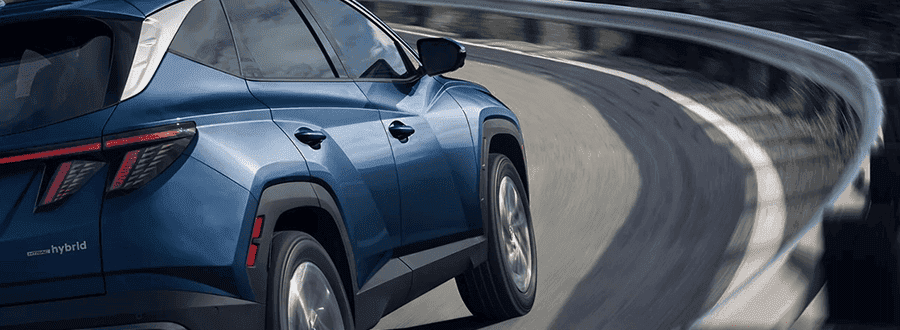
The main differences across 2026 Hyundai Tucson models center on performance, efficiency, drivetrain, and cargo flexibility. The gas Tucson utilizes a 2.5-liter 4-cylinder engine producing 187 hp with standard front-wheel drive or available HTRAC all-wheel drive. The Tucson Hybrid upgrades to a 1.6-liter turbocharged four-cylinder hybrid system outputting 231 hp with 38 mpg combined and standard HTRAC AWD. The Tucson Plug-In Hybrid adds a larger battery for 268 hp, 32 miles of all-electric driving, and 77 MPGe, sacrificing about 7 cubic feet of rear cargo room.
Choosing among these three powertrains comes down to how you plan to drive around South Florida. The standard gasoline engine serves as the accessible entry point into the lineup, appealing to drivers who want a lower initial purchase price and maximum towing capacity. The traditional hybrid requires no external charging setup, storing regenerated energy during braking and automatically cycling between electric power and gasoline drive to minimize fuel stops along coastal routes like Atlantic Avenue in Delray Beach.
For drivers with accessible garage power or daily home charging options, the plug-in hybrid crossover (PHEV) delivers zero-emission electric operation for daily commutes before seamlessly engaging its turbocharged gasoline engine for longer highway travel. All three variants share identical exterior dimensions, featuring an overall length of 182.7 inches and a 108.5-inch wheelbase. Every model delivers a refined passenger cabin outfitted with available dual 12.3-inch curved digital displays and standard wireless Apple CarPlay and Android Auto.
To explore these three distinct powertrains in person, you can reach out to our team by making a quick call or setting a route to our showroom location on Ne 6th Ave to compare available trims side by side.
What Are the Powertrain, Acceleration, and AWD Differences Between Tucson Models?
The 2026 Hyundai Tucson powertrain lineup scales performance and efficiency across three distinct setups, with acceleration times dropping as electrification increases. The base gas engine reaches 60 mph in roughly 8.8 seconds, the hybrid accomplishes the sprint in about 7.7 seconds, and the plug-in hybrid leads the lineup with a 0-to-60 mph time of approximately 7.1 seconds.
Under the hood, the standard gas model relies on a naturally aspirated 2.5-liter 4-cylinder engine generating 187 hp and 178 lb-ft of torque, routed through an 8-speed automatic transmission. Front-wheel drive comes standard on the gas lineup, while HTRAC all-wheel drive is available across all trim levels. Fuel economy for the gas model delivers an EPA-estimated 28 mpg combined in front-wheel drive configuration and 26 mpg combined when equipped with all-wheel drive.
The Tucson Hybrid combines a 1.6-liter turbocharged four-cylinder gasoline engine with an electric motor and a 1.49-kWh lithium-ion battery. This combined system produces 231 hp and 271 lb-ft of torque, managed by a 6-speed automatic transmission. Most hybrid trims feature standard HTRAC AWD and earn up to 38 mpg combined on the Blue SE trim and 35 mpg combined on higher trims like the SEL and Limited. Hyundai has also expanded the lineup to include front-wheel-drive options on select hybrid trims for buyers who prioritize maximum road efficiency over four-wheel traction.
The Tucson Plug-In Hybrid pairs the same 1.6L turbo engine with a stronger 97-hp electric motor and a larger 13.8 kWh traction battery. Total system output reaches 268 hp and 271 lb-ft of torque, paired with a 6-speed automatic and standard HTRAC AWD. The PHEV achieves 77 MPGe combined when utilizing battery power and 35 mpg combined once operating in regular hybrid mode. Recharging the battery pack from empty takes roughly two hours when connected to a Level 2 240-volt charging source.
When shoppers compare powertrains during a visit to our showroom, they frequently ask whether shifting into Sport mode alters power delivery across all three models. In both hybrid variants, Sport mode holds engine revs longer and engages electric torque assistance immediately for instantaneous throttle response when passing slower traffic on the interstate. Drivers interested in zero-emission local travel can check our inventory of new Hyundai Tucson Plug-In Hybrid crossovers to test this electric torque firsthand.
How Does Cargo Space and Practicality Compare Across the 2026 Tucson Lineup?
Cargo utility remains nearly identical between the gas and traditional hybrid Tucson models, while the plug-in hybrid sacrifices a small amount of rear trunk capacity to accommodate its larger traction battery. Gas and hybrid variants offer about 39 cubic feet of space behind the second row and up to 75 cubic feet folded, whereas the plug-in hybrid provides roughly 32 cubic feet behind the rear seats and 66 cubic feet with the rear seats stowed.
The gas and standard hybrid variants store their auxiliary battery components flat beneath the floor, maintaining a wide, deep cargo bed with a low liftover height. This flat load floor easily accommodates large suitcases, folded strollers, or sports equipment without intruding on rear-passenger legroom. Second-row occupants in all three models enjoy an expansive 41.3 inches of rear legroom, matching or exceeding many larger midsize crossovers.
The reduced rear cargo area in the plug-in hybrid is due to the raised floor section housing the 13.8 kWh lithium-ion battery. Despite losing roughly 7 cubic feet of total volume, the PHEV cargo hold remains practical for weekly grocery trips, beach gear, and luggage. Convenient release levers located inside the rear cargo area allow drivers to drop the 60/40 split-folding rear seats flat without walking around to the side doors.
For families planning weekend trips or gear-heavy activities, rooftop cargo options provide additional versatility:
- Roof side rails come standard on all 2026 Hyundai Tucson Hybrid and Plug-In Hybrid trim levels, allowing easy mounting of accessory crossbars, bike racks, or rooftop storage boxes rated to hold up to 220 pounds.
- Gas-powered Tucson models offer an improved 2,750-pound towing capacity when properly equipped with a trailer hitch, giving them an advantage over hybrid models.
- Both the Tucson Hybrid and Tucson PHEV carry a maximum 2,000-pound tow rating, which is sufficient for light utility trailers, jet skis, or small pop-up campers.
- Hands-free smart liftgate technology is available on mid-tier and upper trims, opening automatically when standing near the rear bumper with the proximity key.
How Should You Choose Between the 2026 Tucson Gas, Hybrid, and Plug-In Hybrid?
Choosing the right 2026 Hyundai Tucson depends on your daily driving range, charging access, budget, and towing requirements. The standard gas model delivers the lowest entry MSRP and highest tow rating for casual drivers, the hybrid offers the ideal efficiency sweet spot for daily commuters without needing a plug, and the plug-in hybrid fits short-distance drivers who can recharge at home to eliminate daily fuel use.
The gas-powered Tucson serves as the foundation of the lineup, with a starting MSRP of $29,700 for the SE FWD trim and $31,200 for SE AWD. It is available in six distinct trims, including the rugged XRT, which adds dark exterior accents, side steps, and Terrain Mode settings for mud, sand, and snow. Buyers who log lower annual mileage, work remotely, or want maximum towing capacity up to 2,750 lbs will find the gas model to be a practical, budget conscious choice.
The Tucson Hybrid represents the sweet spot in the lineup for most daily drivers, bridging price and capability. Starting at $32,800 for the Blue SE HEV AWD trim, the hybrid adds 44 hp over the gas engine, increases torque to 271 lb-ft, and delivers 38 mpg combined. The hybrid lineup offers four distinct trim options, including the SEL, SEL Premium, and top-tier Limited priced at $42,425. Over three years of typical suburban driving around Coral Springs, the fuel savings provided by the hybrid system can easily offset its initial price step over a comparable gas model.
The Tucson Plug-In Hybrid is designed for tech-forward commuters and households with home charging access. Offered in two high-spec trims—the SEL PHEV AWD starting at $40,675 and the Limited PHEV AWD at $48,900—the PHEV delivers 268 hp and up to 32 miles of electric driving range. For drivers whose daily round-trip commute falls within 30 miles, the PHEV operates virtually as an electric vehicle during the workweek while keeping a conventional engine ready for long weekend road trips.
Every 2026 Tucson model—regardless of powertrain—is backed by Hyundai’s factory warranty protection:
- 5-year/60,000-mile new-vehicle limited warranty covering bumper-to-bumper components.
- 10-year/100,000-mile powertrain warranty extending to the engine, transmission, and hybrid transaxle.
- 10-year/100,000-mile high-voltage battery warranty specifically covering hybrid and PHEV traction battery components.
- 3 years or 36,000 miles of complimentary factory-scheduled maintenance.
- 5 years of unlimited-mileage 24/7 roadside assistance support.
Quick Answers to Common Questions About the 2026 Hyundai Tucson
Here are concise, direct answers to the most common technical and operational questions buyers ask before selecting a 2026 Hyundai Tucson.
Q: Does the 2026 Hyundai Tucson Hybrid require a 240-volt home charger?
A: No, the standard Tucson Hybrid does not require an external charger or outlet. Its 1.49-kWh battery pack recharges automatically using regenerative braking and excess engine energy during normal driving. Only the Tucson Plug-In Hybrid connects to an external power source, which can charge using a standard 120V household outlet or a faster 240V Level 2 charger.
Q: Is all-wheel drive available across all 2026 Hyundai Tucson powertrains?
A: Yes, HTRAC all-wheel drive is available across every 2026 Tucson gas trim and comes standard on most hybrid and all plug-in hybrid models. The HTRAC system actively distributes torque between the front and rear axles based on vehicle speed, cornering forces, and road grip to maximize stability on wet roads.
Q: What is the battery warranty on the 2026 Hyundai Tucson Hybrid and Plug-In Hybrid?
A: Hyundai protects both the hybrid and plug-in hybrid battery packs with a 10-year/100,000-mile powertrain warranty. This coverage matches the length of the internal combustion powertrain warranty, ensuring long-term confidence regarding high-voltage component reliability. To learn more about our dealership warranty support, our team can walk you through exact coverage terms during your visit.
Q: Can the 2026 Hyundai Tucson Plug-In Hybrid run on gasoline if the battery is empty?
A: Yes, once the 13.8 kWh battery depletes its 32 miles of all-electric range, the Tucson PHEV automatically transitions into standard hybrid operation. The 1.6L turbo engine engages seamlessly to power the vehicle while earning an EPA-estimated 35 mpg combined, eliminating any range anxiety on long journeys.
Q: What features are unique to the 2026 Hyundai Tucson Hybrid and PHEV drive modes?
A: Both electrified Tucson variants include an exclusive Baby Mode setting within their drive mode menus. When activated, Baby Mode softens throttle response and smooths out acceleration profiles to prevent sudden vehicle motions from waking sleeping passengers in the rear seats.
Prices and MSRP referenced in this article are estimates for informational purposes only and do not constitute an offer to sell. See dealer for complete details.
Fuel economy estimates shown may differ from official EPA ratings and should not be relied upon as a guarantee of actual vehicle performance.
0 comment(s) so far on 2026 Hyundai Tucson Gas vs Hybrid vs Plug-In Hybrid: Which One Is Right for You?