

2026 Hyundai Elantra Hybrid vs. Toyota Corolla Hybrid: The Everyday Efficiency Test
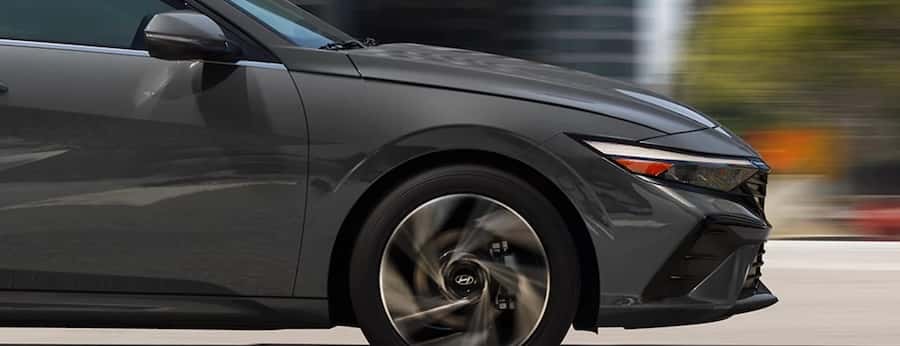
The daily drive along the southeastern coast of Florida demands a vehicle that can handle heavy traffic, intense summer heat, and long stretches of highway driving without draining your wallet at the pump. For professionals and families navigating the busy corridors of Delray Beach, finding a highly efficient compact sedan is often the top priority. The 2026 Hyundai Elantra Hybrid and the 2026 Toyota Corolla Hybrid are two of the most popular contenders in this segment, each offering a distinct approach to electrified driving.
Choosing between these two models comes down to comparing how they perform during real-world driving, how much space they offer for passengers, and the long-term protection they provide. While both vehicles represent excellent engineering, they deliver very different experiences behind the wheel. The Elantra Hybrid focuses on a more engaging driving dynamic and premium cabin space, while the Corolla Hybrid leans on its traditional, conservative hybrid setup.
To experience the refined road manners and advanced technology of the Hyundai lineup in person, we invite you to plan a visit to our showroom. You can easily get directions to Delray Hyundai to explore our selection, or give our sales team a quick call at (561) 462-1991 to discuss current vehicle availability and schedule your test drive.
Comparing the Dual-Clutch Elantra Hybrid Powertrain Against the Corolla CVT
How do the powertrains of the 2026 Hyundai Elantra Hybrid and 2026 Toyota Corolla Hybrid compare? The engineering philosophies behind these two vehicles create completely different driving dynamics. The 2026 Hyundai Elantra Hybrid features a 1.6-liter four-cylinder engine paired with a single electric motor. This combination generates a system total of 139 hp and a robust 195 lb-ft of torque. This power is routed to the front wheels through a 6-speed dual-clutch automatic transmission, which provides crisp, positive gear shifts that mimic a traditional gasoline-powered vehicle.
In contrast, the 2026 Toyota Corolla Hybrid utilizes a 1.8-liter four-cylinder engine paired with an electric motor to produce 138 hp and 105 lb-ft of torque. Instead of a geared transmission, Toyota employs an electronically controlled continuously variable transmission (CVT). While CVTs are highly efficient in stop-and-go city traffic, they often produce a “rubber-band” effect under hard acceleration, causing the engine to rev loudly and hold high RPMs until the vehicle catches up to the speed demand.
The massive torque difference of 90 lb-ft in favor of the Hyundai is immediately noticeable when accelerating from a standstill or merging onto fast-moving highway lanes. The dual-clutch transmission in the Elantra Hybrid eliminates the droning sensation typical of CVTs, giving drivers a much more connected, responsive, and engaging experience.
Engine & Performance
Powertrain specs by trim
| Feature | Blue | Limited | SEL Sport |
|---|---|---|---|
| Engine | 1.6L | 1.6L | 1.6L |
| Horsepower | 139 hp | 139 hp | 139 hp |
| Torque | 195 lb-ft | 195 lb-ft | 195 lb-ft |
| Transmission | 6-speed dual-clutch automatic | 6-speed dual-clutch automatic | 6-speed dual-clutch automatic |
| Drivetrain | Front-wheel drive | Front-wheel drive | Front-wheel drive |
What Is the Real-World MPG of the Elantra Hybrid Compared to the Corolla Hybrid?
The 2026 Hyundai Elantra Hybrid achieves an EPA-estimated 53 MPG combined, while the 2026 Toyota Corolla Hybrid offers around 52 MPG combined. For most hybrid shoppers, fuel economy is the ultimate deciding factor, and this is where the Elantra Hybrid establishes a clear advantage, particularly on the open road. The 2026 Hyundai Elantra Hybrid Blue trim achieves an exceptional EPA-estimated rating of 51 mpg city / 58 hwy and 54 mpg combined. This setup allows the vehicle to achieve a maximum estimated driving range of up to 594 miles on a single tank of fuel.
The 2026 Toyota Corolla Hybrid is rated at 53 mpg city and 46 mpg highway, resulting in a 50 mpg combined rating. While the Corolla Hybrid holds a minor 2 mpg advantage in low-speed city driving, the Elantra Hybrid completely outclasses it on the highway by an impressive 12 mpg. For commuters who spend their time traveling at higher speeds between coastal cities, the highway efficiency of the Elantra Hybrid will compound into massive fuel savings over the course of ownership.
Even when you step up to the more feature-rich SEL Sport and Limited trims of the Elantra Hybrid, the efficiency remains incredibly competitive. These trims return an EPA-estimated 49 mpg city / 52 hwy and 50 mpg combined. The thermal management systems in the Elantra Hybrid are highly advanced, ensuring that the lithium-ion battery pack operates at peak efficiency even during hot South Florida summers when the air conditioning system is working overtime to keep the cabin cool.
Which Cabin Offers More Passenger Legroom and Cargo Capacity?
The Elantra Hybrid provides 14 cubic feet of trunk space, slightly more than the Corolla Hybrid’s 13 cubic feet, offering more room for passengers and cargo. Beyond fuel economy, a compact sedan must be practical enough to handle daily errands, beach gear, and passenger transport comfortably. The Elantra Hybrid is a larger vehicle overall, measuring 185.4 inches in length compared to the Corolla Hybrid’s 182.5 inches. This larger exterior footprint translates directly into a much more accommodating interior cabin for both passengers and cargo.
In terms of carrying capacity, the Elantra Hybrid provides about 14 cubic feet of trunk space, whereas the Corolla Hybrid offers about 13 cubic feet. That extra space is highly valuable when loading groceries, luggage, or weekend recreation gear. Furthermore, the rear seats in the Elantra Hybrid fold flat, allowing you to slide longer items through from the trunk without hassle.
Passenger comfort is another area where the Elantra Hybrid shines, especially in the second row. It delivers an impressive 38.0 inches of rear legroom, which is 3.2 inches more than the Corolla Hybrid’s tight 34.8 inches of rear legroom. This makes the Elantra Hybrid a genuinely viable option for carrying adult passengers or growing teenagers in the back seat. Up front, the Elantra Hybrid Blue and SEL Sport trims offer 40.6 inches of headroom, providing an open, airy feel that makes long commutes feel far less confining than the 38.3 inches of front headroom found in the Corolla Hybrid.
Dimensions & Capacity
Capacity and dimensions by trim
| Feature | Blue | Limited | SEL Sport |
|---|---|---|---|
| Seating | 5 | 5 | 5 |
| Cargo | 14.2 cu ft | 14.2 cu ft | 14.2 cu ft |
| Curb weight | 2,965 lbs | 3,069 lbs | — |
How Do the Trim Levels and Technology Features Compare?
The 2026 Elantra Hybrid comes in SE, SEL, and Limited trims, each packed with advanced tech features that rival those in the Corolla Hybrid. Hyundai structures the Elantra Hybrid lineup into three distinct, well-equipped tiers: the value-packed Blue, the stylish SEL Sport, and the premium Limited. For the 2026 model year, the SEL Sport trim features standard gloss-black wheels, adding a bold, athletic look to the sedan’s dramatic exterior styling. The Limited trim represents the pinnacle of compact luxury, adding premium touches like ventilated front seats, H-Tex leatherette upholstery, and a standard sunroof.
The technology packages in the Elantra Hybrid are highly advanced. The Blue trim comes standard with an 8-inch touchscreen that supports wireless Apple CarPlay and Android Auto. Stepping up to the SEL Sport or Limited trims replaces this setup with a gorgeous 10.25-inch navigation display paired with a matching 10.25-inch digital gauge cluster. The Corolla Hybrid offers an 8-inch screen on its lower trims, with a 10.5-inch screen available on higher grades, but its overall dashboard presentation feels much more traditional and less integrated than Hyundai’s sleek, dual-screen layout.
On the safety front, every single 2026 Elantra Hybrid comes loaded with standard driver-assist technologies. This includes Blind-Spot Collision Warning, Rear Cross-Traffic Collision-Avoidance Assist, and Forward Collision-Avoidance Assist with Pedestrian Detection. While the Corolla Hybrid features Toyota Safety Sense 3.0, the Elantra Hybrid Limited elevates highway driving comfort by including Highway Driving Assist and Smart Cruise Control with Stop and Go, which automatically manages your speed and lane positioning during heavy traffic.
Pricing
Pricing by trim
| Feature | Blue | Limited | SEL Sport |
|---|---|---|---|
| Base MSRP | $25,450 | $29,800 | $27,425 |
| Destination charge | $1,245 | $1,245 | $1,245 |
Which Sedan Wins the Ownership Battle on Warranty Protection?
Hyundai offers a 10-year/100,000-mile powertrain warranty on the Elantra Hybrid, surpassing Toyota’s 8-year/100,000-mile coverage for the Corolla Hybrid. When you are purchasing a new vehicle, the warranty is a direct reflection of the manufacturer’s confidence in their product’s long-term reliability. Hyundai has long been famous for offering “America’s Best Warranty,” and the 2026 Elantra Hybrid continues this tradition with coverage that outperforms what Toyota offers.
The Elantra Hybrid is backed by an industry-leading 10-year/100,000-mile powertrain warranty and a 5-year/60,000-mile basic warranty. Toyota, on the other hand, only provides a 5-year/60,000-mile powertrain warranty and a 3-year/36,000-mile basic warranty. If you plan to keep your hybrid sedan beyond the typical three-to-five-year ownership cycle, the Hyundai warranty offers years of additional protection against unexpected repair costs.
Both manufacturers provide dedicated coverage for the hybrid battery pack. The Elantra Hybrid features a 10-year/100,000-mile hybrid battery warranty. While the Corolla Hybrid offers a 10-year/150,000-mile battery warranty, the vastly superior bumper-to-bumper and powertrain warranties on the Elantra Hybrid make it the far more secure investment for the vast majority of retail buyers.
Quick Answers Before You Visit Hyundai
If you are trying to decide which efficient hybrid sedan is the better buy, reviewing some of the most common questions we hear from shoppers can help clarify your decision.
Q: What is the starting price range for the 2026 Hyundai Elantra Hybrid?
The entry-level Blue trim starts at a base MSRP of $25,450, while the mid-tier SEL Sport starts at $27,425, and the top-of-the-line Limited starts at $29,800. Each of these models is subject to a standard inland destination charge of $1,245.
Q: Does the 2026 Hyundai Elantra Hybrid offer all-wheel drive?
No. The Elantra Hybrid is strictly a front-wheel-drive sedan across all three trim levels. If you require all-wheel drive, the Corolla Hybrid does offer it on select trims, though choosing AWD reduces the Corolla’s fuel economy.
Q: What makes the Elantra Hybrid so comfortable for daily commuting?
The Elantra Hybrid features highly supportive front seats, and the Limited trim adds ventilated front seats, which are incredibly valuable for staying cool during hot summer days in Boca Raton. The physical buttons and knobs for climate and audio controls also make it incredibly easy to use while driving.
Q: Is there a federal tax credit available for purchasing the 2026 Elantra Hybrid?
No. The federal clean vehicle tax credits under IRC §30D were terminated for vehicles acquired after September 30, 2025. There are currently no active federal tax credits available for new hybrid purchases.
Q: How does the Elantra Hybrid compare to the non-hybrid Elantra?
The Elantra Hybrid is not only far more efficient, returning up to 54 mpg combined compared to the standard model’s 35 mpg combined, but it also accelerates to 60 mph roughly half a second quicker thanks to the instant torque of its electric motor.
Prices and MSRP referenced in this article are estimates for informational purposes only and do not constitute an offer to sell. See dealer for complete details. Fuel economy estimates shown may differ from official EPA ratings and should not be relied upon as a guarantee of actual vehicle performance.
0 comment(s) so far on 2026 Hyundai Elantra Hybrid vs. Toyota Corolla Hybrid: The Everyday Efficiency Test