

Vehicle-To-Load (V2L) How The 2025 IONIQ 5 and 6 Power Your Drive
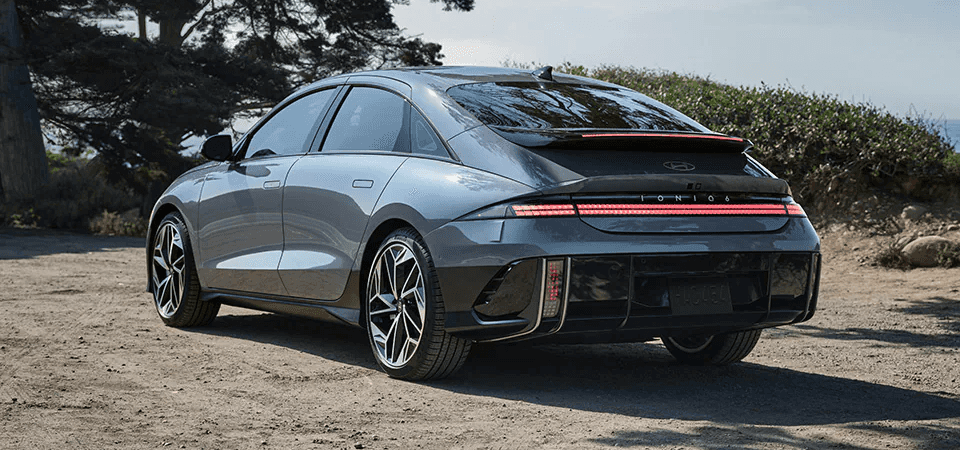
An electric vehicle stores a substantial amount of energy in its battery. With Hyundai Vehicle-to-Load technology, commonly called V2L, some of that energy can be used to operate compatible electrical devices when a traditional outlet is not nearby.
The 2025 Hyundai IONIQ 5 and 2025 Hyundai IONIQ 6 both offer V2L capability, making it possible to power items such as laptops, lights, small appliances, camping equipment, and certain power tools. Access and equipment vary by model and trim, so it is important to understand how the system works before using it.
Learn more below, then visit Delray Hyundai for a demonstration. You can also browse our new Hyundai inventory online.
What Is Hyundai Vehicle-to-Load Technology?
Vehicle-to-Load allows a compatible electric vehicle to send power from its high-voltage battery to an external electrical device. In simple terms, the vehicle can function like a large portable power source.
External V2L is accessed through a compatible adapter connected to the vehicle’s charging port. Certain trims also include a household-style outlet inside the cabin, allowing a compatible device to be plugged directly into the vehicle without using the exterior adapter.
V2L can be useful for:
- Charging laptops, cameras, phones, and other electronics
- Operating lights and certain small appliances while camping
- Powering compatible tools at a remote location
- Keeping selected essential devices operating during a temporary outage
- Supporting tailgating, outdoor events, and mobile work
Using V2L consumes energy from the vehicle’s battery and reduces the remaining driving range. Drivers should monitor the battery level and set an appropriate discharge limit before connecting equipment.
V2L Is Different From Whole-Home Backup Power
Although V2L can power individual devices, it should not be confused with Vehicle-to-Home technology. Standard V2L equipment is not designed to connect directly to a home’s electrical panel or send power back to the utility grid.
| Technology | What It Powers | Additional Equipment |
|---|---|---|
| Vehicle-to-Load | Individual compatible appliances, tools, and electronic devices | A compatible exterior adapter or an equipped interior outlet |
| Vehicle-to-Home | Selected household circuits or a home electrical system | Compatible bidirectional equipment and professional installation |
| Vehicle-to-Grid | The electrical grid | Compatible vehicle, charger, utility program, and grid approval |
Never connect V2L equipment directly to home wiring unless the system uses approved transfer equipment and has been installed by a qualified professional.
How Hyundai’s E-GMP Platform Supports V2L
The IONIQ 5 and IONIQ 6 are built on Hyundai Motor Group’s Electric-Global Modular Platform, also known as E-GMP. This dedicated electric-vehicle platform supports bidirectional power flow, allowing energy stored in the battery to be converted into usable AC power for compatible devices.
E-GMP also supports high-voltage charging architecture. That allows both IONIQ models to recharge quickly at compatible DC fast-charging stations under suitable conditions.
V2L and fast charging serve different purposes. Fast charging puts energy into the battery, while V2L draws stored energy out of the battery to operate an external device.
Using V2L in the 2025 Hyundai IONIQ 5
The 2025 Hyundai IONIQ 5 offers available 120-volt V2L capability for powering compatible equipment inside or outside the vehicle.
For exterior use, a compatible V2L adapter connects to the charging port and provides an outlet for the device. Certain trims also include a second-row interior V2L outlet. Hyundai lists the built-in second-row outlet as standard on the 2025 IONIQ 5 XRT and Limited.
Exact operation may vary depending on the trim and installed equipment, but the general process includes:
- Park the vehicle in a safe, well-ventilated location.
- Set the desired battery discharge limit in the vehicle’s EV settings.
- Connect the compatible V2L adapter to the exterior charging port, or use the interior outlet if equipped.
- Plug in a compatible appliance or electrical device.
- Confirm that V2L is active and monitor the remaining battery level.
- Turn off and disconnect the device before removing the adapter.
The 2025 IONIQ 5 can charge from 10% to 80% in approximately 20 minutes when connected to a compatible 350-kW, 800-volt DC ultra-fast charger and using the included CCS adapter. Actual charging time varies based on battery temperature, state of charge, charger output, weather, and other conditions.
Using V2L in the 2025 Hyundai IONIQ 6
The 2025 Hyundai IONIQ 6 offers similar external V2L functionality through a compatible adapter connected to the vehicle’s charging port.
Hyundai also lists an interior second-row V2L outlet as standard on the 2025 IONIQ 6 Limited. Drivers considering another IONIQ 6 trim should confirm its V2L equipment and accessory requirements with the dealership.
The IONIQ 6 may be especially appealing to drivers who want V2L capability in an aerodynamic electric sedan. It can support many of the same practical uses as the IONIQ 5, including outdoor activities, mobile work, and temporary power for compatible devices.
Under ideal conditions, the 2025 IONIQ 6 can charge from 10% to 80% in approximately 18 minutes using a compatible 350-kW, 800-volt DC ultra-fast charger.
2025 IONIQ 5 vs. IONIQ 6 V2L Comparison
| Feature | 2025 Hyundai IONIQ 5 | 2025 Hyundai IONIQ 6 |
|---|---|---|
| Body style | Electric SUV | Electric sedan |
| Exterior V2L | Available with a compatible adapter | Available with a compatible adapter |
| Built-in second-row V2L outlet | Standard on XRT and Limited | Standard on Limited |
| Approximate 10-80% fast-charging time | As little as 20 minutes under ideal conditions | As little as 18 minutes under ideal conditions |
| Best fit | Drivers who want a flexible cabin and SUV-style cargo space | Drivers who prefer an efficient, streamlined electric sedan |
Equipment varies by trim and configuration. Exterior adapters may be sold separately. Confirm current vehicle and accessory details with Delray Hyundai.
Important V2L Safety and Usage Tips
V2L is convenient, but connected equipment must remain within the system’s supported electrical limits. Not every appliance or device is suitable for use.
- Review the vehicle owner’s manual before using V2L.
- Use only compatible, undamaged adapters, plugs, and extension cords.
- Check the device’s voltage, amperage, and power requirements.
- Do not use damaged, wet, or improperly grounded electrical equipment.
- Keep the adapter and electrical connections protected from water.
- Do not connect equipment that exceeds the V2L system’s rated capacity.
- Monitor the vehicle’s battery level and remaining driving range.
- Do not attempt to power home wiring directly through a household outlet.
When in doubt, consult the owner’s manual or ask the Delray Hyundai team to demonstrate the correct equipment and operating procedure for the specific vehicle.
Explore Hyundai V2L Technology at Delray Hyundai
Vehicle-to-Load technology adds another layer of versatility to Hyundai electric vehicles. Whether you want to power equipment during an outdoor trip, support a mobile workspace, or keep selected devices running during a temporary outage, the IONIQ 5 and IONIQ 6 provide useful options.
Visit Delray Hyundai for a closer look at the V2L outlets, adapters, EV settings, charging equipment, and available trims. Our team can help you compare the IONIQ 5 and IONIQ 6 and determine which model better fits your driving and technology needs.
Browse our new Hyundai inventory online or call (561) 462-1994 to ask about available Hyundai electric vehicles in Delray Beach, FL.
Vehicle-to-Load availability, interior outlets, adapters, charging equipment, charging speeds, and features vary by trim and configuration. V2L operation consumes battery energy and reduces available driving range. Not all electrical appliances are compatible. Charging time varies based on charger output, battery condition, battery temperature, state of charge, weather, and other factors. Review the applicable owner’s manual and see Delray Hyundai for complete details.
0 comment(s) so far on Vehicle-To-Load (V2L) How The 2025 IONIQ 5 and 6 Power Your Drive