

2026 Hyundai Elantra vs 2026 Nissan Sentra
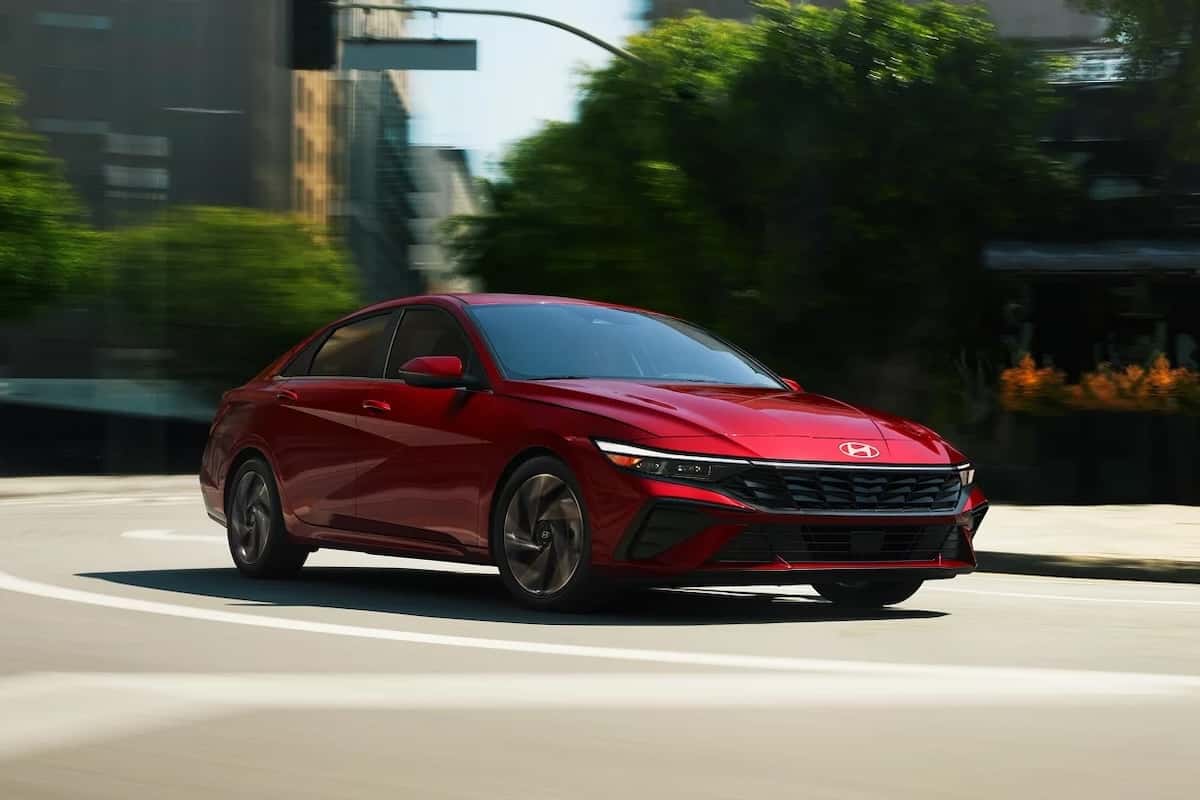
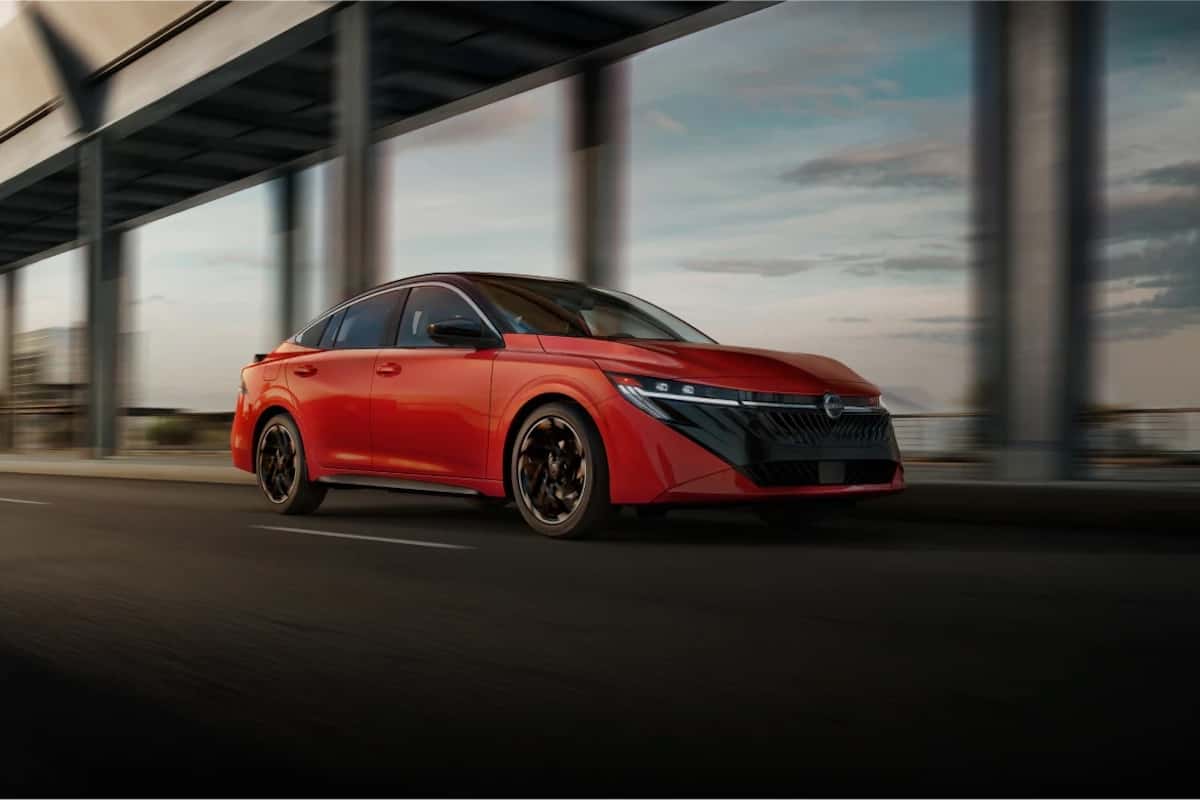
The 2026 Hyundai Elantra distinguishes itself in the competitive compact sedan segment with a compelling balance of efficiency, performance, and advanced features. Starting at a well-positioned MSRP of $22,625 for the SE trim, it offers a 2.0-liter inline-4 engine producing 147 horsepower at 6,200 rpm and 132 lb-ft of torque at 4,500 rpm. This powertrain, paired with an Intelligent Variable Transmission (IVT), delivers an estimated combined fuel economy of 36 mpg—outpacing the equally priced 2026 Nissan Sentra’s 2.0-liter engine that generates 149 hp and 146 lb-ft but manages a lower estimated combined 33 mpg.
Seating for five passengers and a 14.2 cubic foot trunk provide practical space for daily needs, matching closely with the Sentra’s 14.3 cubic feet. Notably, the Elantra’s curb weight is lighter at 2,868 pounds in the base trim compared to the Sentra’s 3,097 pounds, contributing to its fuel efficiency and agile driving experience.
Hyundai enhances ownership confidence with an industry-leading 10-year/100,000-mile powertrain warranty, significantly outperforming Nissan’s 5-year/60,000-mile coverage. Alongside its sharp design and fuel economy, the Elantra’s combination of value, warranty, and standard advanced safety features make it an outstanding option in this segment. To explore the latest Elantra lineup in person, visit Delray Hyundai at 655 Ne 6th Ave or Shop New Hyundai Elantra Inventory today.
Comparing Performance and Driving Experience
| Specification | 2026 Hyundai Elantra | 2026 Nissan Sentra |
|---|---|---|
| Engine | 2.0L 4-Cylinder | 2.0-liter DOHC 16-valve 4-cylinder |
| Horsepower | 147 hp @ 6,200 rpm | 149 hp @ 6,400 rpm |
| Torque | 132 lb-ft @ 4,500 rpm | 146 lb-ft @ 4,400 rpm |
| Transmission | Intelligent Variable Transmission (IVT) | Xtronic CVT (Continuously Variable Transmission) |
| Drivetrain | FWD | Front-Wheel Drive (FWD) |
The 2026 Hyundai Elantra sets itself apart in the compact sedan segment with a well-balanced powertrain and notably efficient fuel consumption. The base SE trim comes equipped with a 2.0-liter four-cylinder engine producing 147 horsepower at 6,200 rpm and 132 lb-ft of torque at 4,500 rpm, paired with Hyundai’s Intelligent Variable Transmission (IVT), optimized for smooth acceleration and fuel savings. This combination enables the Elantra SE to achieve an estimated 32 mpg in the city and 41 mpg on the highway, totaling 36 mpg combined — an efficiency edge compared to many rivals, including the Nissan Sentra.
In comparison, the 2026 Nissan Sentra S trim is powered by a slightly larger 2.0-liter DOHC 16-valve four-cylinder engine generating 149 horsepower at 6,400 rpm and 146 lb-ft of torque at 4,400 rpm. It utilizes Nissan’s Xtronic Continuously Variable Transmission (CVT), delivering a refined and consistent power delivery. However, this setup yields a slightly lower fuel economy, with an estimated 30 mpg city, 38 mpg highway, and 33 mpg combined, highlighting Hyundai’s advantage in this regard.
Both models are front-wheel drive, aligning with segment standards, but the Elantra’s curb weights across SE, SEL Sport, and SEL Sport Premium trims range from 2,868 to 2,987 pounds, lighter than the Sentra’s curb weights from 3,097 to 3,177 pounds, contributing to the Elantra’s nimble handling and responsiveness.
While both sedans prioritize comfort and an easy driving experience, the Elantra’s Intelligent Variable Transmission and slightly lower weight aid in delivering a more engaging and fuel-efficient drive. On the other hand, the Sentra’s engine offers marginally higher horsepower and torque values, which could appeal to buyers seeking a touch more immediate power.
Braking systems differ as well: the Elantra includes 12-inch front rotors for effective stopping power, supporting confidence in daily urban or suburban commuting. Nissan integrates Active Ride Control and Intelligent Engine Brake to enhance ride smoothness and control.
In conclusion, the 2026 Hyundai Elantra balances spirited yet efficient performance, slightly outperforming the Sentra in fuel economy and weight, while still providing adequate power for most driving needs. This balance makes the Elantra an exceptionally strong proposition for drivers seeking a practical yet engaging compact sedan.
Exterior Design and Styling
| Specification | 2026 Hyundai Elantra | 2026 Nissan Sentra |
|---|---|---|
| Seating Capacity | 5 | 5 |
| Cargo Volume | 14.2 cu ft | 14.3 cu ft |
| Curb Weight | 2,868 lbs | 3,097 lbs |
| Overall Length | 185.4 in” | 183.3 in” |
| Overall Width | 71.9 in” | 71.5 in” |
| Overall Height | 55.7 in” | 56.9 in” |
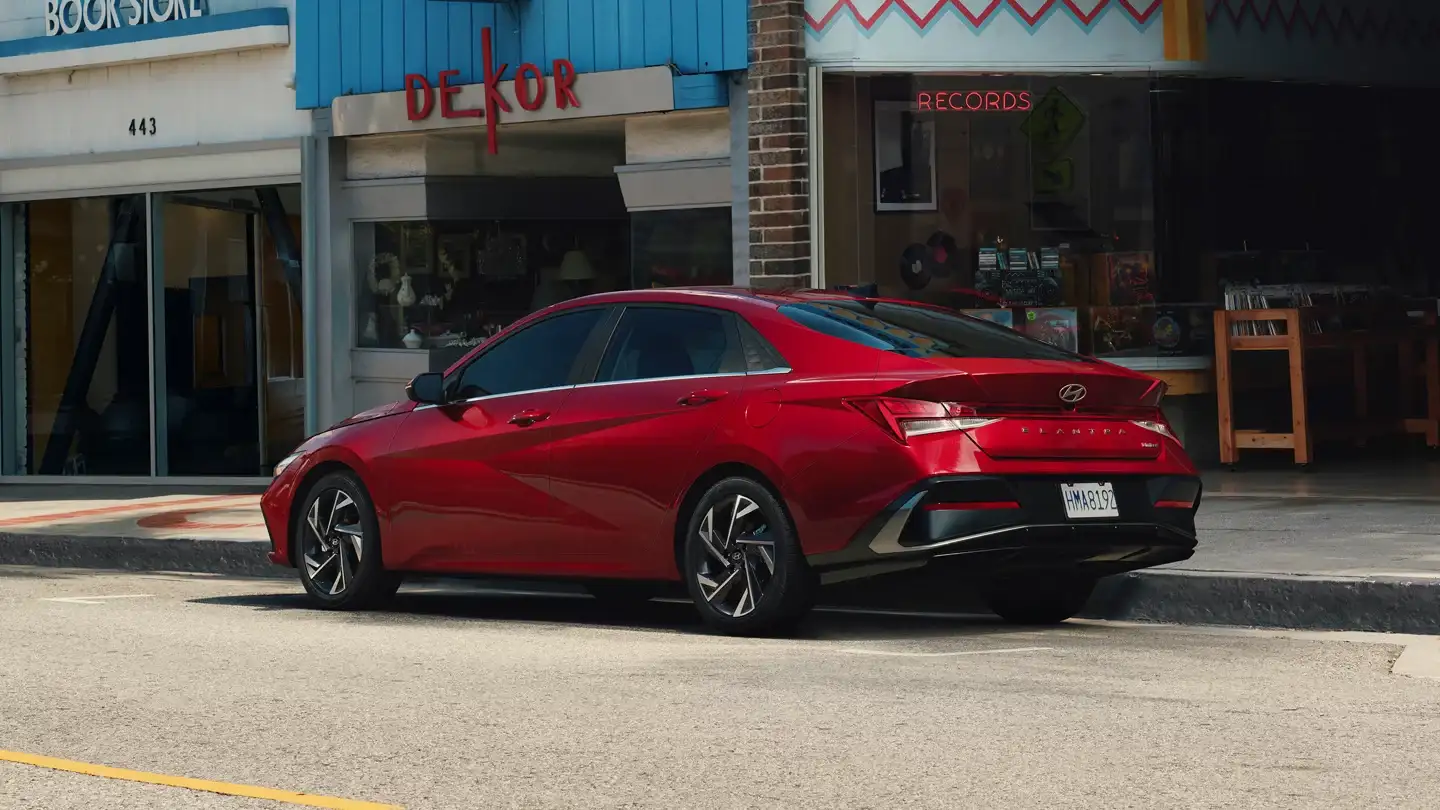
The 2026 Hyundai Elantra features with a striking “Parametric Dynamics” design language that sets a new benchmark in the compact sedan segment. With a length of 185.4 inches and a width of 71.9 inches, it presents a broader and more athletic stance compared to the 183.3-inch length and 71.5-inch width of the 2026 Nissan Sentra. The Elantra’s distinct angular features—highlighted by its 15- or 17-inch alloy wheels depending on trim — and sharp LED lighting elements create an aggressive yet refined look that appeals to modern sedan buyers seeking boldness without excess.
The SEL Sport trim’s 17-inch gloss-black alloy wheels, combined with gloss-black side mirrors and a rear spoiler, inject visual sportiness without resorting to a full performance model. This design approach contrasts with the Nissan Sentra’s SR trim, which opts for 18-inch 10-spoke aluminum-alloy wheels and a dark chrome V-motion grille for a sporty appeal. However, the Elantra’s integrated design flows seamlessly with its athletic proportions, making the blacked-out accents a natural extension rather than separate add-ons.
Height-wise, the Elantra rides slightly lower at 55.7 inches compared to the Sentra’s 56.9 inches, enhancing its sleek profile and reducing aerodynamic drag, which contributes to the Elantra’s superior estimated fuel economy of 36 mpg combined versus the Sentra’s 33 mpg. Exterior conveniences such as the Elantra’s hands-free smart trunk release and available power tilt-and-slide sunroof on higher trims further underline its blend of elegance and practicality. Meanwhile, the Sentra also offers practical touches like a rear spoiler and moonroof in higher trims but weighs notably more — approximately 3,097 to 3,177 pounds — versus the Elantra’s lighter 2,868 to 2,987 pounds, emphasizing the Elantra’s agility.
Altogether, the 2026 Elantra’s exterior styling excels by merging sharp, contemporary design elements with practical features that stand out clearly against the Sentra’s more conservative silhouette. The Elantra’s refined proportions and distinctive detailing make it an evident choice for those seeking both flair and sophistication in a compact sedan.
Interior Comfort and Space
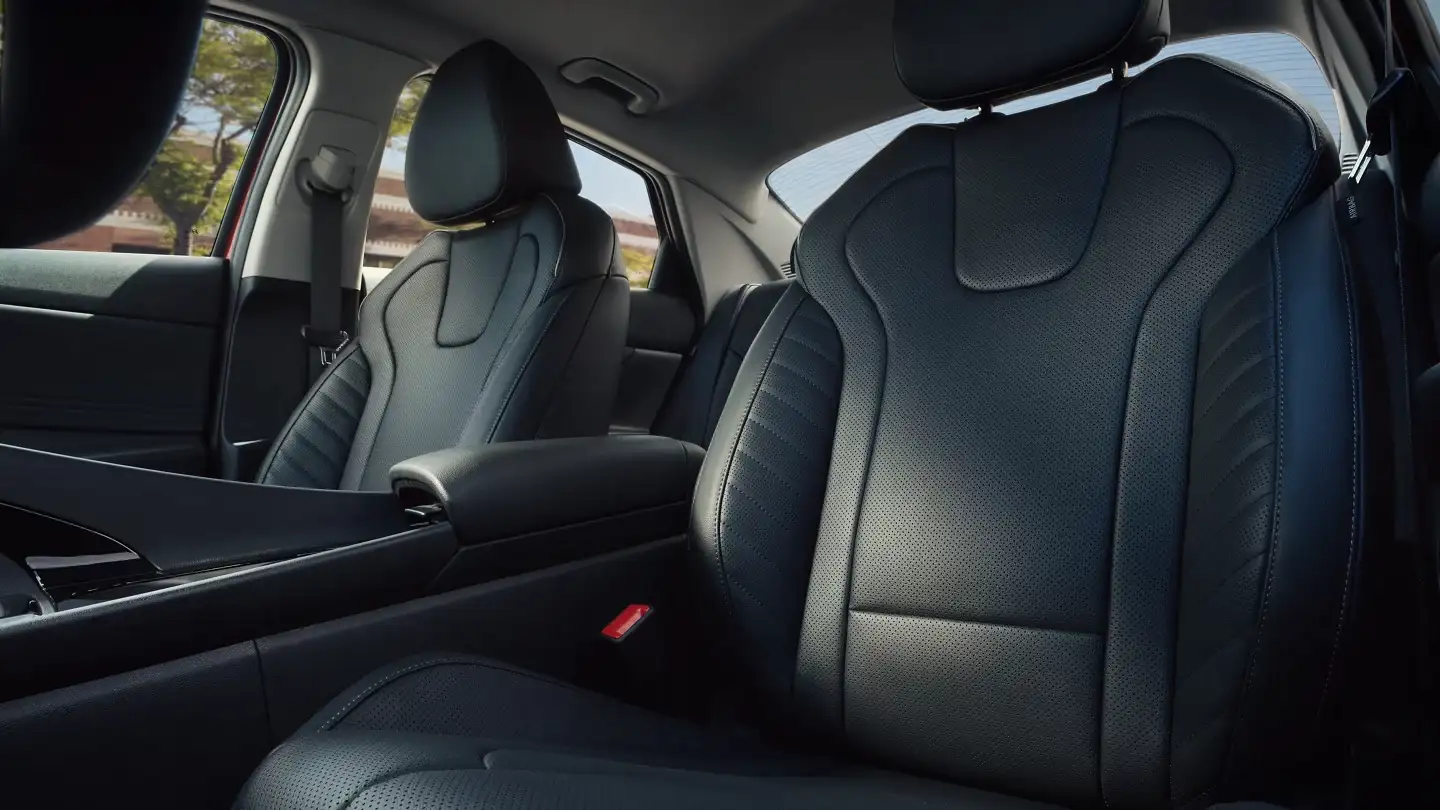
The 2026 Hyundai Elantra delivers a cabin environment that emphasizes both spaciousness and comfort, distinguishing itself in the compact sedan class with thoughtfully designed passenger accommodations. It offers seating for five occupants and notably leads with rear legroom measuring 38.0 inches, surpassing many competitors and providing enhanced comfort for rear passengers. This rear space advantage is particularly meaningful for adults who often find compact sedans cramped in the back seats.
The Elantra’s interior materials and features advance the comfort experience further. Even base SE trims include cloth seating with manually adjustable 6-way driver seats, while higher trims add amenities like heated front seats and a power tilt-and-slide sunroof exclusive to the SEL Sport Premium, reaching beyond what the competition often provides in this segment. Interior details such as a leather-wrapped steering wheel and shift knob become standard on mid-level trim SEL Sport and above, enhancing tactile quality and overall perceived refinement.
In terms of cargo capacity, the Elantra provides 14.2 cubic feet of trunk space, just slightly less than the Nissan Sentra’s 14.3 cubic feet. Although cargo volumes are closely matched, the Elantra benefits from its innovative cargo management solutions like a reversible cargo tray and optional accessories to protect and organize the trunk area, contributing to practicality.
By comparison, the 2026 Nissan Sentra also seats five but offers less rear legroom and weighs substantially more at 3,097 pounds on the entry-level S trim versus the Elantra SE’s curb weight of 2,868 pounds. The Sentra’s interior features include Zero Gravity seats, designed to reduce fatigue, and a quieter cabin due to enhanced noise insulation. However, these advantages are balanced by the Elantra’s superior fuel economy and modern technology integration, which also influence comfort by reducing driver distraction.
Overall, the 2026 Hyundai Elantra creates a compelling environment that prioritizes passenger space, comfort-oriented features, and functional usability, making it an adept choice for buyers who require both everyday usability and an inviting cabin ambiance.
Technology and Connectivity Features
The 2026 Hyundai Elantra confidently sets itself apart from its rivals with an intuitive and well-rounded technology suite across its trims. Starting with the base SE trim, the Elantra offers an 8-inch color touchscreen that supports wireless Apple CarPlay and Android Auto, enabling effortless smartphone integration without cluttering the cabin with cables. As you step up to the SEL Sport and SEL Sport Premium trims, the display remains the same size but introduces advanced conveniences such as wireless device charging and a fully digital 10.25-inch instrument cluster, enhancing the driving experience with clear, customizable information.
By contrast, the 2026 Nissan Sentra starts with a notably larger 12.3-inch NissanConnect touchscreen even on its entry-level S trim, offering wireless smartphone connectivity, which does raise the bar on infotainment screen size. However, the Elantra compensates with its emphasis on seamless wireless operation and more expansive wireless smartphone compatibility offered standard even in lower trims. The Elantra also features dual USB-C ports for rear passengers and front USB data and charging ports, promoting superior device connectivity options for all occupants.
Audio systems further distinguish the Elantra, with its SEL Sport Premium and higher trims equipped with SiriusXM Satellite Radio and available Bose Premium Audio with 8 speakers, delivering rich sound quality. The Sentra offers a Bose Premium 8-speaker system, but only as part of optional packages on upper trims like the SR Premium, making it less accessible to mid-level buyers.
Another edge for the Elantra lies in its support for over-the-air software updates, available in the SEL Sport Premium trim, which allows owners to keep their vehicle’s software current without visiting a dealership. This contrasts with the Sentra, which does not list OTA updates as a feature.
In summary, while the Sentra boasts a larger touchscreen standard across trims, the Elantra’s wireless compatibility, multiple USB-C connections, and hands-free charging options create a more connected, driver-friendly environment. The premium audio experience and OTA updates further position the 2026 Hyundai Elantra as the more tech-forward choice in this segment.
Safety Innovations and Driver Assistance
The 2026 Hyundai Elantra sets a high safety benchmark in the compact sedan segment by delivering an expansive suite of advanced driver assistance systems (ADAS) across all trims. Starting with the base SE, the Elantra includes Forward Collision-Avoidance Assist with Pedestrian Detection and Blind-Spot Collision-Avoidance Warning as standard features. Notably, the SEL Sport trim adds enhanced Forward Collision-Avoidance Assist that includes Pedestrian, Cyclist, and Junction-Turning Detection, a level of proactive safety uncommon for vehicles in this class. The SEL Sport Premium further integrates Smart Cruise Control with Stop & Go capability, allowing adaptive cruise control that can manage stop-and-go traffic automatically. These broad safety provisions emphasize Hyundai’s commitment to providing peace of mind even at the entry-level price of $22,625.
By comparison, the 2026 Nissan Sentra, starting at a closely competitive base MSRP of $22,600, offers a solid array of protective features, including Automatic Emergency Braking with Pedestrian Detection and Blind Spot Warning. However, the ProPILOT Assist, Nissan’s semi-autonomous driving system, is only available as an optional feature on the higher SR and SL trims rather than standard at lower levels. The Sentra’s Safety Shield 360 suite encompasses Rear Automatic Braking and Rear Cross Traffic Alert, which are commendable but not as comprehensive as the Elantra’s standard technology. Additionally, certain adaptive features like Lane Keep Assist and Intelligent Lane Intervention are not all standard across Sentra trims, which may require purchasers to opt for pricier packages to match Hyundai’s safety baseline.
Hyundai further strengthens its safety offering with Blind-Spot View Monitor and a 360-degree Surround View Monitor available on upper Elantra trims, enhancing visibility and reducing blind spots during lane changes and parking maneuvers. The Sentra’s Intelligent Around View Monitor is optional on high-end trims and not standard, marking a distinction in driver assistance amenities.
Supporting safety, Hyundai’s inclusion of Highway Driving Assist (HDA) on premium Elantra trims adds adaptive cruise combined with lane-centering technology, facilitating reduced driver fatigue on longer drives. While Nissan provides adaptive cruise features under ProPILOT Assist on the SL trim, this technology is less widely accessible across its lineup.
Overall, the 2026 Hyundai Elantra ensures robust safety and driver-assist technologies without requiring customers to upgrade through multiple trims, creating a dependable foundation for driver confidence. The consistent standardization of critical features, especially in the base SE and mid-range SEL Sport trims, creates a meaningful advantage over the Sentra’s approach, where several key systems are optional or reserved for higher trims. This makes the Elantra a more accessible choice for buyers prioritizing safety without sacrificing value.
Fuel Efficiency Breakdown
| Specification | 2026 Hyundai Elantra | 2026 Nissan Sentra |
|---|---|---|
| City MPG | 32 mpg | 30 mpg |
| Highway MPG | 41 mpg | 38 mpg |
| Combined MPG | 36 mpg | 33 mpg |
| Fuel Type | Regular Unleaded | Regular unleaded |
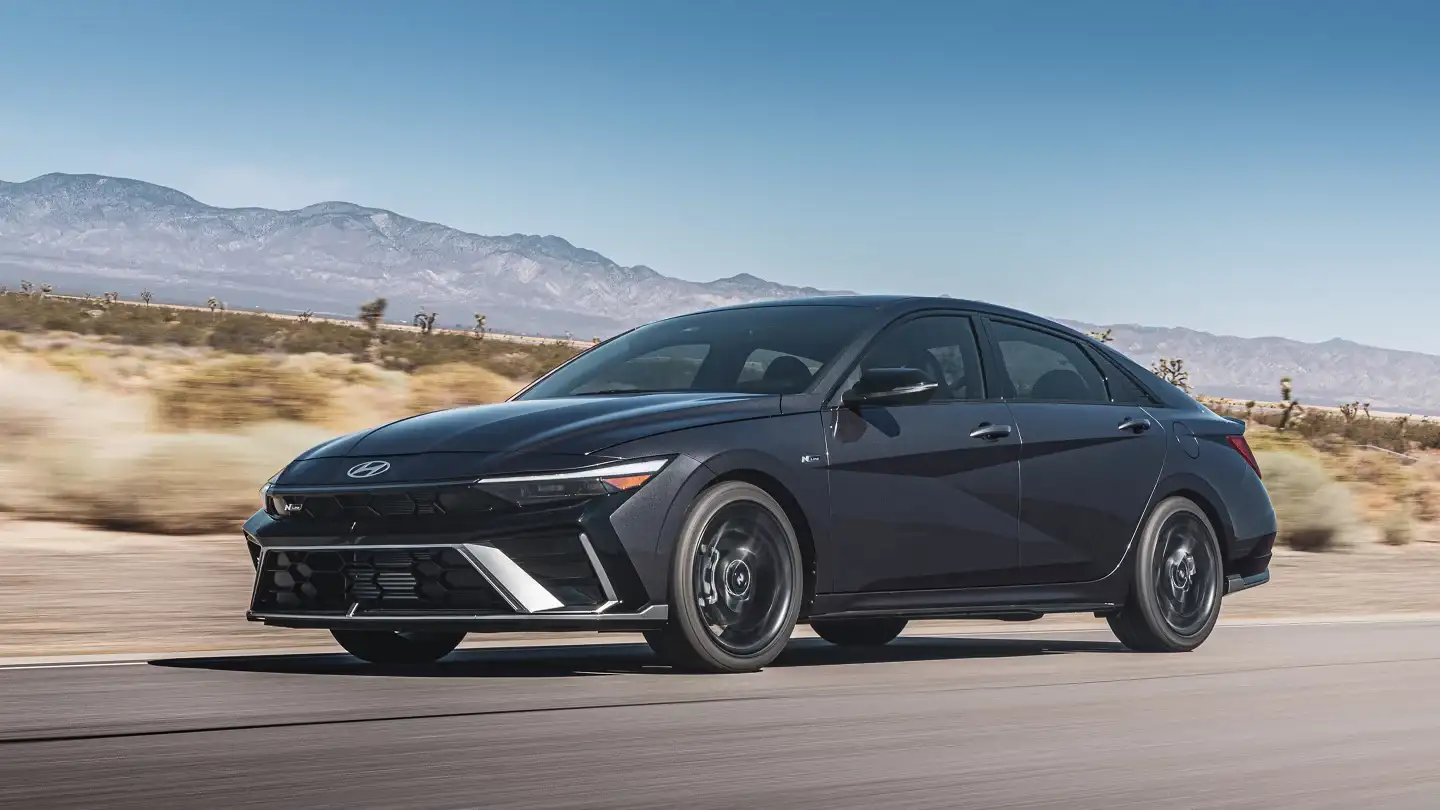
The 2026 Hyundai Elantra sets itself apart with superior fuel economy across its core trims, offering an estimated combined rating of 36 mpg for the SE trim. This is especially notable when compared to the 2026 Nissan Sentra S trim, which delivers an estimated combined fuel economy of 33 mpg. In-city and highway figures further emphasize this gap: the Elantra SE achieves an estimated 32 mpg city and 41 mpg highway, while the Sentra S manages 30 mpg city and 38 mpg highway.
The difference in powertrains also plays a role; the Elantra’s 2.0L 4-cylinder producing 147 hp pairs with an Intelligent Variable Transmission (IVT), a setup optimized for efficiency. Conversely, the Sentra’s 2.0L DOHC 16-valve 4-cylinder makes a slightly higher 149 hp, but its Xtronic CVT produces marginally lower economy numbers that reflect a trade-off favoring performance over fuel savings.
For buyers focused on minimizing fuel stops, the Elantra’s lighter curb weight — 2,868 lbs versus the Sentra’s 3,097 lbs — also contributes to its efficiency advantage. This combination of engine tuning, transmission technology, and reduced vehicle weight ensures the Hyundai delivers consistent fuel economy benefits that enhance everyday usability.
Pricing and Trim Options
| Specification | 2026 Hyundai Elantra | 2026 Nissan Sentra |
|---|---|---|
| MSRP | $22,625 | $22,600 |
The 2026 Hyundai Elantra offers three well-defined trims that cater to a wide range of preferences and budgets. The SE serves as the entry-level option with a starting MSRP of $22,625. It features a 2.0L 4-cylinder engine delivering 147 hp and an Intelligent Variable Transmission (IVT), achieving an estimated combined fuel economy of 36 mpg. This trim focuses on essential technology with an 8-inch touchscreen, wireless Apple CarPlay and Android Auto, and safety features like Blind-Spot Collision-Avoidance Warning.
Moving up, the SEL Sport trim commands $23,750 and adds athletic styling with 17-inch gloss-black wheels, gloss-black mirrors, and a rear spoiler, along with dual-zone automatic climate control and wireless device charging. Although the engine remains the same as the SE, the SEL Sport’s curb weight rises slightly to 2,932 lbs with a modest drop in combined MPG to 34.
At the higher tier, the SEL Sport Premium lists for $25,075 and combines sporty design cues with premium amenities such as a power tilt-and-slide sunroof, heated front seats, heated side mirrors, and Smart Cruise Control with Stop & Go. It maintains the same 2.0L engine and fuel economy profile as the SEL Sport.
In comparison, the 2026 Nissan Sentra’s trim lineup initiates at $22,600 for the base S model, powered by a 149-hp 2.0-liter engine with a CVT, delivering an estimated 33 mpg combined. The Sentra’s SV and SR trims, priced at $23,370 and $25,000 respectively, offer incremental upgrades but fall short of the Elantra in fuel efficiency and value for technology and safety features at similar price points.
Overall, the Elantra’s blend of competitive pricing, superior fuel economy, and thoughtful differentiation across trims makes it an attractive choice for buyers seeking balanced performance, comfort, and technology. The clear trim progression allows customers to select the level that best meets their needs without paying for unwanted extras.
Warranty and Maintenance Advantages
| Specification | 2026 Hyundai Elantra | 2026 Nissan Sentra |
|---|---|---|
| Basic Warranty | 5 years / 60,000 miles | 3 years / 36,000 miles |
| Powertrain Warranty | 10 years / 100,000 miles | 5 years / 60,000 miles |
| Corrosion Warranty | 7 years / unlimited miles | 5 years / unlimited miles |
| Roadside Assistance | 5 years / unlimited miles | 3 years / 36,000 miles |
The 2026 Hyundai Elantra offers industry-leading warranty coverage that sets it apart from the 2026 Nissan Sentra, providing substantial peace of mind for long-term ownership. Hyundai’s basic warranty extends for 5 years or 60,000 miles, compared to Nissan’s shorter 3-year or 36,000-mile basic coverage. This means Elantra buyers benefit from a longer period of bumper-to-bumper protection against defects in materials or workmanship.
Powertrain coverage also favors the Elantra, with Hyundai offering 10 years or 100,000 miles, more than doubling Nissan’s 5-year or 60,000-mile powertrain warranty. This extended guarantee covers the critical engine, transmission, and drivetrain components, which may significantly reduce repair costs as the vehicle ages. Furthermore, Hyundai includes a corrosion warranty that lasts 7 years with unlimited miles, whereas Nissan provides 5 years with unlimited mileage.
Roadside assistance is an additional area where Hyundai excels, with 5 years of unlimited mileage coverage, versus Nissan’s 3 years capped at 36,000 miles. This ensures Elantra owners have dependable support for emergency situations, including towing and lockout service, without time or mileage worries.
With these comprehensive warranties and maintenance advantages, Delray Hyundai buyers secure exceptional protection and support, reinforcing the Elantra’s compelling value proposition in its segment.
Practicality and Everyday Usability
The 2026 Hyundai Elantra delivers practical features that suit daily driving demands while standing out in the compact sedan segment. With seating for five and a cargo capacity of 14.2 cubic feet, it offers space nearly identical to the Nissan Sentra’s 14.3 cubic feet, ensuring ample room for groceries, luggage, or gear.
The Elantra’s curb weight ranges from 2,868 lbs in the SE trim to 2,987 lbs in the SEL Sport Premium, noticeably lighter than the Sentra’s 3,097 lbs for the base S trim. This contributes not just to better fuel economy but also to more agile handling in urban environments.
Fuel efficiency further enhances usability, with the base Elantra SE achieving an estimated 36 mpg combined, outperforming the Sentra S’s 33 mpg. The Elantra’s Intelligent Variable Transmission (IVT) paired with its 2.0L engine helps maintain smooth acceleration and efficient power delivery tailored for stop-and-go traffic.
Convenience extends to technology, with wireless Apple CarPlay and Android Auto standard even on the SE, reducing cable clutter for daily commutes. Practical details like heated mirrors and power tilt-and-slide sunroof on higher trims improve comfort in varying weather.
Altogether, the Elantra’s thoughtful blend of space, efficiency, and technology delivers an engaging yet functional driving experience tailored for real-world needs.
Finance Your New Hyundai Elantra at Delray Hyundai
Purchasing the 2026 Hyundai Elantra at Delray Hyundai is designed to be a smooth, straightforward process. With a starting MSRP of $22,625 for the SE trim, the Elantra offers an attractive price aligned with its efficient 36 mpg combined fuel economy and spacious seating for five. Whether you prefer the base SE or a sportier SEL Sport variant, our finance experts are ready to guide you through suitable payment options tailored to your budget.
At Delray Hyundai, our streamlined financing application process simplifies approval so you can focus on selecting the right Elantra trim without delay. You can conveniently apply for financing online before you visit, speeding up your in-store experience. Our team works closely with multiple lenders to secure competitive rates and terms that fit your financial needs.
To explore your options or schedule a test drive, contact us at (561) 462-1991 or visit 655 Ne 6th Ave, Delray Beach, FL 33483. Start your journey toward owning a stylish and efficient Elantra today with confidence and ease.